Table of Contents
Banff National Park Travel Guide: Ultimate Canadian Rockies Road Trip
If you’re building a Banff National Park travel guide for your own road trip, you’re already halfway to one of the most rewarding journeys in North America. Turquoise glacial lakes, snow-capped peaks, wandering elk, and small mountain towns that smell like pine and fresh coffee — Banff delivers on every postcard promise, and then some.
This guide is written for first-time visitors, including a growing number of travelers from India and across Asia who are discovering Banff as a bucket-list Canadian destination. Whether you’re planning a Banff road trip Canada style adventure by rental car or flying in for a shorter visit — from Delhi, Mumbai, London, or Sydney — everything you need — location, weather, attractions, hotels, food, budget, and a ready-made itinerary — is right here.
Introduction to Banff National Park
Established in 1885, Banff National Park is Canada’s oldest national park and the crown jewel of the Canadian Rockies, managed today by Parks Canada. Spread across 6,641 square kilometers of the Alberta wilderness, it’s home to iconic sights like Lake Louise, Moraine Lake, and the town of Banff itself, all cradled by jagged mountain ranges and glacier-fed rivers.
What makes this park special isn’t just its scenery — it’s the sheer variety packed into one destination. You can hike an alpine trail in the morning, soak in a natural hot spring by afternoon, and watch the sunset over a glass of Alberta wine in the evening. Few places on Earth offer that kind of range within a single day.
For any traveler creating a Banff National Park travel guide itinerary, understanding the geography, seasons, and logistics upfront will save both time and money once you land.
Where is Banff National Park Located?
Banff National Park is located in the province of Alberta, western Canada, within the Canadian Rocky Mountains. Understanding this location is the first step in any Banff National Park travel guide, since it shapes how you’ll plan flights, driving routes, and season-specific logistics. It borders British Columbia to the west and sits about 128 kilometers (roughly 1.5 hours) west of Calgary by car.
The nearest major international gateway is Calgary International Airport (YYC), which receives direct and connecting flights from major global hubs, including several one-stop options from Delhi and Mumbai via London, Frankfurt, or Vancouver.
Two towns anchor the park: Banff, the larger and livelier of the two, and Lake Louise, a quieter hamlet closer to the park’s most photographed lakes. Both make excellent bases depending on your travel style.
Best Time to Visit Banff National Park
Getting the timing right is one of the most important parts of planning any Banff National Park travel guide, since Banff transforms dramatically with the seasons. For real-time seasonal updates, Banff & Lake Louise Tourism is a reliable source before you finalize your dates.
Summer (June to August)
This is peak season and the most popular window for first-time visitors. Days are long, temperatures hover between 15–25°C, and every hiking trail, lake, and gondola is fully operational. Expect larger crowds and higher hotel prices, especially in July and August.
Fall (September to October)
A quieter, often underrated time to visit. Larch trees near Lake Louise and Moraine Lake turn golden in late September, temperatures cool down, and crowds thin out significantly. Many consider this the best time to visit Banff National Park for photography and hiking without the summer rush.
Winter (December to March)
Banff turns into a snow-globe scene, with three major ski resorts — Sunshine Village, Lake Louise Ski Resort, and Mt. Norquay — drawing skiers and snowboarders from around the world. Expect sub-zero temperatures, frozen lakes, and the surreal Banff Ice Magic Festival.
Spring (April to May)
The shoulder season, with melting snow, muddy trails, and unpredictable weather. Prices drop, but many high-altitude trails and Moraine Lake Road remain closed until early June.
Bottom line: for lakes, hiking, and classic scenery, plan your trip between late June and September. For snow sports, target January and February.
Top Things to Do in Banff National Park
No Banff National Park travel guide would be complete without a solid list of activities. Here are the experiences worth prioritizing.
Book Your Tour Packages
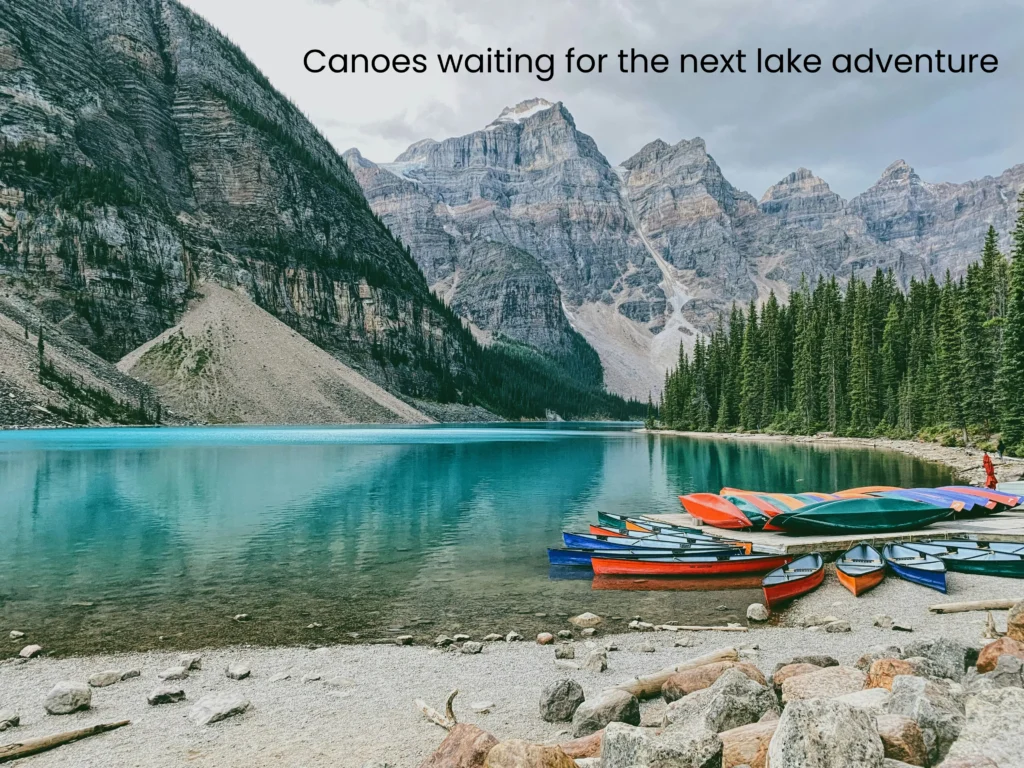
1. Canoe on Lake Louise
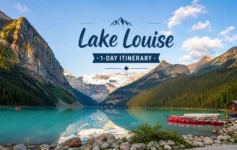
Renting a canoe on Lake Louise’s glacier-fed, impossibly turquoise water is one of the most photographed experiences in Canada.
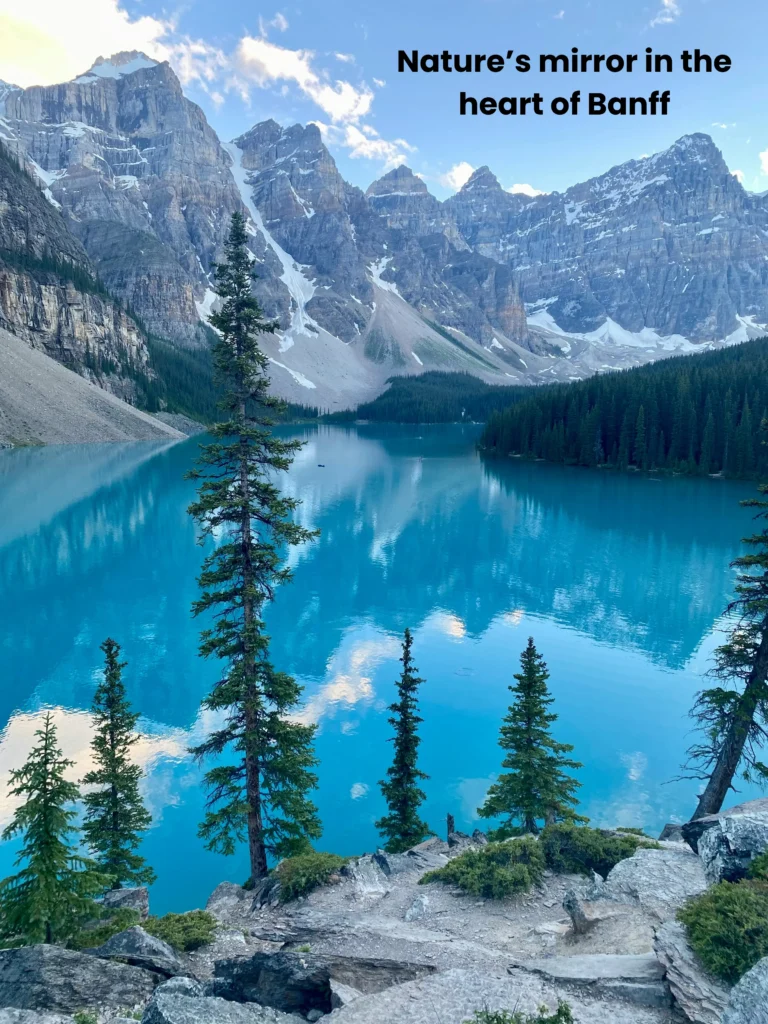
2. Hike to Moraine Lake and the Rockpile
The short but steep Rockpile Trail rewards you with the classic postcard view of Moraine Lake surrounded by the Valley of the Ten Peaks.
3. Ride the Banff Gondola
The Banff Gondola whisks visitors up Sulphur Mountain in under 10 minutes, opening up a 360-degree view of six mountain ranges.
4. Soak in the Banff Upper Hot Springs
A natural mineral hot spring with mountain views — perfect after a long day of hiking.
5. Drive the Icefields Parkway
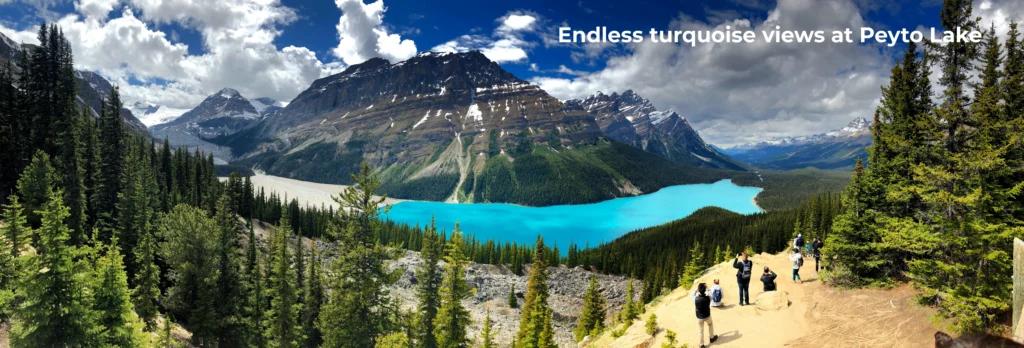
Often called one of the most scenic drives on the planet, the Icefields Parkway winds from Lake Louise to Jasper, passing waterfalls, glaciers, and the striking Peyto Lake viewpoint.
6. Wildlife Spotting
Elk, bighorn sheep, black bears, and occasionally grizzlies roam the park. Early morning and dusk offer the best (and safest) viewing opportunities from a vehicle.
7. Johnston Canyon Walk
A well-maintained catwalk trail leading to lower and upper waterfalls, suitable for most fitness levels — a favorite recommendation across nearly every Banff National Park travel guide for families.
Top Tourist Spots in Banff National Park
Every Banff National Park travel guide should point you toward these standout locations first:
- Lake Louise – the park’s most famous glacial lake
- Moraine Lake – the deep-blue lake surrounded by the Ten Peaks
- Banff Avenue – the main street for shopping, cafes, and local craft stores
- Bow Falls – an easy, scenic waterfall walk near Banff townsite
- Vermilion Lakes – ideal for sunrise photography with Mount Rundle as backdrop, and a spot nearly every Banff National Park travel guide recommends for early risers
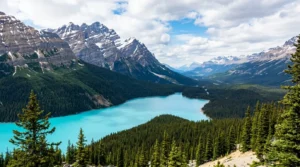
- Peyto Lake – a wolf-shaped, brilliant turquoise lake along the Icefields Parkway
- Sulphur Mountain Boardwalk – accessible via the Banff Gondola
Hotels & Resorts in Banff National Park
Accommodation ranges from budget hostels to five-star mountain resorts, and booking early is essential during peak summer and winter months. This section of the Banff National Park travel guide breaks down options by budget so you can book with confidence.
Book Your Stay in Banff
Luxury: Fairmont Banff Springs and Fairmont Chateau Lake Louise are the park’s most iconic stays, both offering castle-like architecture and direct lake or mountain access.
Mid-Range: Rimrock Resort Hotel and Banff Ptarmigan Inn offer comfortable rooms with mountain views at a more manageable price point, typically in the town of Banff itself.
Budget: HI Banff Alpine Centre and Samesun Banff cater to backpackers and solo travelers, with dorm beds and shared kitchens that keep costs low — the go-to picks in almost any budget-focused Banff National Park travel guide.
Tip: Staying in Canmore, a town just 20 minutes outside the park gates, is often 20–30% cheaper than staying inside Banff or Lake Louise, while still offering easy access to the park.
Food to Try in Banff National Park
No Banff National Park travel guide is complete without covering the food scene, and Banff punches well above its size for a mountain town. Travel Alberta regularly highlights the region’s growing farm-to-table dining culture.
- Alberta Beef – try a steak at one of Banff Avenue’s grill restaurants; Alberta is famous for its beef quality across Canada
- Poutine – the classic Canadian comfort dish of fries, cheese curds, and gravy, found at almost every casual eatery
- Bison and Elk dishes – several restaurants serve regional game meats, a distinctly Canadian Rockies specialty
- Wild Salmon – often sourced from British Columbia and served smoked or grilled
- Local Craft Beer – Banff Ave Brewing Co. is a popular stop for craft beer paired with mountain views
- Maple-Everything – from maple lattes to maple-glazed pastries, it’s a sweet, distinctly Canadian souvenir for your taste buds
How to Reach Banff National Park
According to Destination Canada, Alberta’s Rockies remain one of the country’s most searched regions among international visitors, and getting there is straightforward once you know the routes. This part of the Banff National Park travel guide breaks each transport option down clearly.
Book Your Flight Ticket
By Air
Fly into Calgary International Airport (YYC), the closest major airport, roughly 90 minutes from Banff townsite by road.
By Road
Rental cars are the most flexible option, with a well-maintained highway (Trans-Canada Highway 1) connecting Calgary directly to Banff. Winter driving requires snow tires and extra caution.
By Shuttle or Bus
Several operators run direct airport shuttles from Calgary to Banff and Lake Louise, a convenient option for travelers who prefer not to drive in mountain conditions.
By Train
The Rocky Mountaineer offers a scenic (though premium-priced) rail journey through the Canadian Rockies, though it’s an experience in itself rather than a purely functional transfer.
If you’re planning connecting travel across Canada, check our Canada road trip planning guide and car rental tips for first-time international drivers for additional logistics support.
Banff National Park Budget Guide
Budgeting is one of the trickiest parts of any Banff National Park travel guide to nail down, since costs shift a lot by season and travel style. Here’s a realistic daily breakdown.
| Travel Style | Daily Budget (CAD) | Approx. USD | Includes |
|---|---|---|---|
| Backpacker | 100–150 | $75–110 | Hostel dorm, groceries, public transit, free trails |
| Mid-Range | 250–400 | $185–295 | 3-star hotel, rental car, sit-down meals, 1–2 paid activities |
| Luxury | 500+ | $370+ | 4–5 star resort, private tours, fine dining |
Additional costs to plan for: a Parks Canada entry pass (required for all vehicles entering the park), parking fees at popular lakes during peak season, and gondola or ski lift tickets if applicable.
Suggested 1-Day Itinerary for Banff National Park
This Banff National Park itinerary hits every essential stop if you only have a single day to explore.
7:00 AM – Start early at Moraine Lake to beat the crowds and parking restrictions (shuttle required in peak summer) — a tip repeated in nearly every Banff National Park travel guide for good reason.
9:00 AM – Drive to Lake Louise, rent a canoe, or simply walk the lakeshore trail.
11:30 AM – Grab lunch in Lake Louise village or head back toward Banff townsite.
1:00 PM – Ride the Banff Gondola up Sulphur Mountain for panoramic views.
3:00 PM – Walk to Bow Falls and stroll along Banff Avenue for shopping and coffee.
5:30 PM – Relax at the Banff Upper Hot Springs.
7:30 PM – Dinner featuring Alberta beef or bison at a downtown restaurant.
This single day hits the park’s highlights efficiently, though we’d recommend at least 3–4 days if your schedule allows for the Icefields Parkway drive.
Travel Tips for Banff National Park
Keep these points in mind while finalizing your Banff National Park travel guide plans:
- Book Moraine Lake and Lake Louise parking or shuttle passes online in advance during summer — walk-in parking fills up by 6 AM.
- Carry bear spray on longer hikes and know basic wildlife safety protocols.
- Layer clothing regardless of season; mountain weather changes quickly.
- A valid Parks Canada pass is mandatory for every vehicle entering the park.
- Currency is Canadian Dollar (CAD); most places accept cards, but carry some cash for smaller cafes.
- Indian and other international travelers should check Canada’s visitor visa (TRV) or eTA requirements well in advance of travel dates.
Nearby Attractions Beyond Banff National Park
No Banff National Park travel guide is complete without a look at what’s just outside the park boundaries:
- Jasper National Park – roughly a 4-hour scenic drive north along the Icefields Parkway, and often covered as an extension of any Banff National Park travel guide
- Yoho National Park – just across the British Columbia border, home to Emerald Lake and Takakkaw Falls
- Canmore – a charming, less crowded mountain town just outside Banff’s gates
- Calgary – worth a day for the Calgary Tower and Stampede grounds if flying in or out
For more inspiration, browse our complete range of Canada and Rockies destination guides on dev.rydetravel.com.
Photography Tips for Banff National Park
Banff rewards photographers at almost every turn, but a little planning goes a long way toward getting shots that actually match what your eyes see. These tips are worth bookmarking from this Banff National Park travel guide before you head out with your camera.
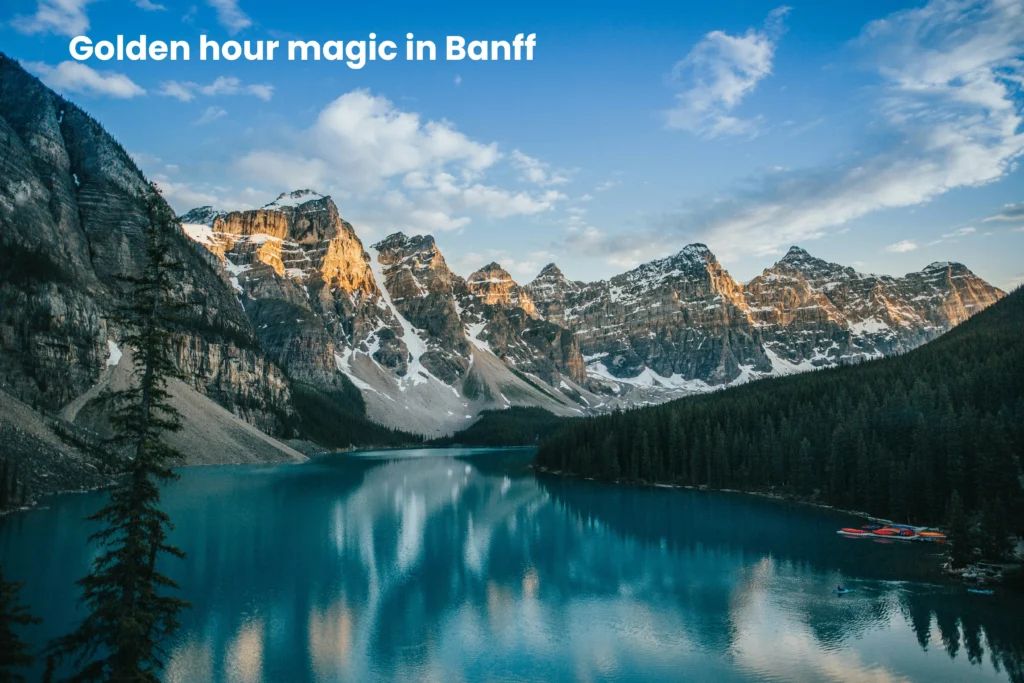
Shoot during golden hour. The hour right after sunrise and right before sunset bathes the peaks in warm light and calms the wind on lakes like Moraine and Peyto, producing that mirror-like reflection effect seen in classic Banff photography.
Arrive early for Moraine Lake. Parking fills up before 6 AM in peak summer, and the Rockpile viewpoint gets crowded fast. Early arrival means both better light and an empty frame.
Pack a polarizing filter. It cuts glare off the water’s surface and deepens the turquoise color of glacial lakes, which can otherwise look washed out in direct midday sun.
Use a wide-angle lens for the Icefields Parkway. The scale of the mountains along this route is hard to capture with a standard lens; wide angles help convey just how massive the landscape really is.
Respect wildlife distance guidelines. Telephoto lenses (200mm or longer) let you photograph elk, bighorn sheep, or bears safely without approaching them, which is both a safety requirement and park regulation.
Don’t skip the “boring” hours. Midday light is harsh for landscapes but ideal for capturing turquoise lake colors at their most saturated, particularly at Peyto Lake’s viewpoint.
Sustainable Travel Tips for Banff National Park
As visitor numbers climb each year, Parks Canada and local tourism boards have emphasized responsible travel practices to help preserve the park’s ecosystems for future visitors. Any thorough Banff National Park travel guide should include these habits.
Stick to marked trails. Alpine vegetation in the Rockies is fragile and slow-growing; stepping off-trail, even briefly for a photo, can damage plant life that takes decades to recover.
Use the shuttle system in peak season. Moraine Lake and Lake Louise both operate seasonal shuttle services specifically to reduce vehicle congestion and roadside parking damage — using them isn’t just convenient, it directly reduces environmental strain.
Pack out all trash, including food scraps. Banff’s wildlife, particularly bears, can become dangerously habituated to human food, which often leads to relocation or euthanasia of the animal. Never leave food waste on trails or at viewpoints.
Refill water bottles instead of buying single-use plastic. Most visitor centers and townsite locations in Banff and Lake Louise have refill stations.
Support local businesses. Choosing locally owned restaurants, guides, and shops over large chains keeps tourism revenue within the Bow Valley community that maintains the park’s trails and infrastructure.
Travel in shoulder season if your schedule allows. Visiting in late May, September, or October spreads tourist impact more evenly across the year and often gives you a quieter, more sustainable experience overall.
Frequently Asked Questions
What is the best time to visit Banff National Park?
As this Banff National Park travel guide covers above, late June through September offers the best weather for hiking and lake activities, while December to March suits skiing and snow-based experiences.
How many days do I need in Banff National Park?
Most of this Banff National Park travel guide’s recommendations work well with a minimum of 3 days, comfortably covering Lake Louise, Moraine Lake, and Banff townsite without rushing.
Do I need a car to explore Banff National Park?
A car offers the most flexibility, which most Banff National Park travel guide recommendations agree on, though shuttles and organized tours are reliable alternatives, especially during peak summer months when parking is restricted.
Is Banff National Park expensive to visit?
As outlined in this Banff National Park travel guide’s budget section, costs vary widely; budget travelers can manage on CAD 100–150 per day, while mid-range and luxury trips can range from CAD 250 to over 500 per day.
Can Indian travelers visit Banff National Park easily?
Yes — this Banff National Park travel guide is written with Indian travelers in mind. Indian passport holders typically need a Canadian visitor visa (TRV), and connecting flights are available via hubs like London, Frankfurt, or Vancouver into Calgary.
What should I pack for a Banff National Park trip?
Per this Banff National Park travel guide’s packing recommendations, layered clothing, waterproof hiking shoes, a light rain jacket, sunscreen, and bear spray for longer trail hikes are all essential.
This Banff National Park travel guide is part of our ongoing Canada destination series. For more curated road trip guides, visit dev.rydetravel.com.

Leave a Reply