
⚡ Quick Take: France in 2026 offers Indian travelers an easy Schengen-visa gateway to iconic cities, alpine escapes, and châteaux, best experienced with 10–14 days split between Paris and 1–2 nearby regions.
⚡ Key Highlights:
- Paris remains the must-visit base — Eiffel Tower, Louvre, and Versailles are easily covered via short train rides, and skip-the-line tickets save hours during peak season.
- Budget travelers should aim for shoulder seasons (April–May or September–October) for lower flight and hotel costs, plus thinner crowds at top attractions.
- Insider tip: Combine Paris with the Loire Valley or Normandy for a day trip — both are reachable without needing a rental car, making them ideal for first-time visitors.
France Tourist Places 2026 spans iconic city landmarks like the Eiffel Tower and Louvre in Paris, historic sites such as Mont Saint-Michel and the D-Day beaches of Normandy, the châteaux of the Loire Valley, and the French Riviera — all reachable by Indian tourists and business travellers with a Schengen Type-C visa, official skip-the-line e-tickets, and a well-planned 7–10 day itinerary built around Paris as the base.
Whether you’re chasing postcard views or squeezing in sightseeing between business meetings, exploring France Tourist Places 2026 is easier than it looks — as long as you book through official channels and plan your days smartly. This guide walks you through everything: what actually counts as a “tourist place” in France, how to book flights and monument tickets, a ready-to-use 10-day itinerary, family travel tips, local transport options, trusted tour operators, hotel picks, and where to eat inside major attractions.
To book your accomadation, click here. To Book Local Travel, click here. To book your Travel insurance here
Traveling Overseas: Click here to buy an eSIM. For more info on eSIM, click here
Table of Contents
One quick tip before you book: buy flights only after your Schengen visa is in process or approved. Most France tourist visa applications ask for a confirmed but flexible round-trip itinerary — not a locked-in, non-changeable ticket bought too early.
A Short History of France’s Top Tourist Places
Most of the France Tourist Places 2026 travellers flock to weren’t built for tourism at all — they carry centuries of political, religious, or military history. Here’s a quick look at each, along with the key features you’ll actually see on a visit.
Eiffel Tower
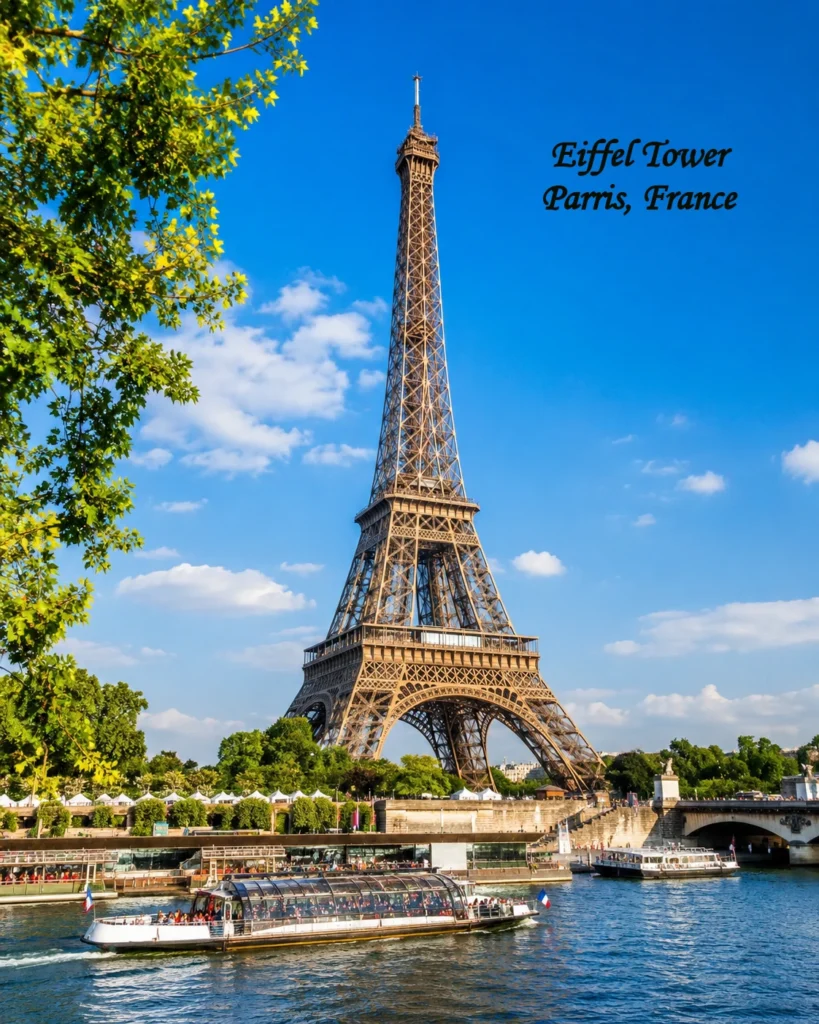
Gustave Eiffel built the tower in 1889 as the entrance arch for that year’s World’s Fair, marking the centenary of the French Revolution. It was designed to stand for just 20 years before being dismantled — but its usefulness as a radio transmission tower saved it, and it’s now the most-visited paid monument in the world and the single most photographed landmark on any France Tourist Places 2026 itinerary.
- 3 public floors with panoramic viewing decks, reaching 276 metres at the summit
- A glass floor section on the 1st floor for a view straight down
- Two on-site restaurants — Madame Brasserie and the Michelin-starred Le Jules Verne
- An hourly light show that sparkles across the tower every evening after sunset
- Stairs access to the 1st and 2nd floors for visitors who skip the lift queue
Good to know before you go: Top-floor and lift tickets are released online 60 days in advance and sell out fast in peak season, so book directly through the official Eiffel Tower site rather than third-party resellers. Children under 4 enter free, and discounted rates apply for ages 4–24. Arriving after 9 PM, when queues thin out, is a good trick if you’re only after the view.
Louvre Museum
The Louvre started life as a 12th-century fortress built to defend Paris, was rebuilt into a royal palace over the centuries, and was handed to the public as a museum in 1793, right after the French Revolution stripped the monarchy of its private art collection. Today it’s the largest and most-visited museum on earth, and easily the most-searched name on any France Tourist Places 2026 shortlist.
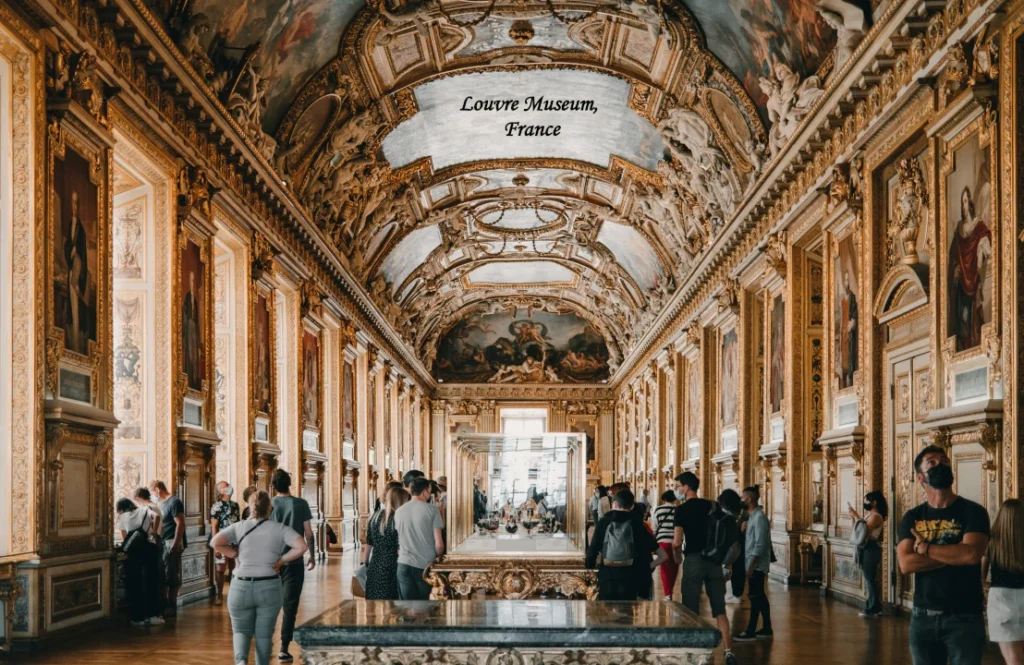
- Home to the Mona Lisa, Venus de Milo, and Liberty Leading the People
- Over 35,000 exhibits on permanent display, drawn from a collection of nearly 500,000 works, across 8 curatorial departments
- The iconic glass pyramid entrance, designed by architect I. M. Pei in 1989
- Spread across 3 wings — Denon, Sully, and Richelieu — connected by underground galleries
- Closed on Tuesdays; open late (until 9:45 PM) on Wednesdays and Fridays for smaller crowds
Good to know before you go: Book timed-entry tickets in advance on the official Louvre website — walk-in queues at the pyramid entrance can run over an hour in peak season. If you’re short on time, enter via the Carrousel du Louvre underground mall or the Porte des Lions entrance, both usually quieter than the main pyramid. The museum is genuinely too large to see in one visit, so it’s worth picking 2–3 must-see wings (like Denon for the Mona Lisa and Italian art) rather than trying to cover everything.
Palace of Versailles
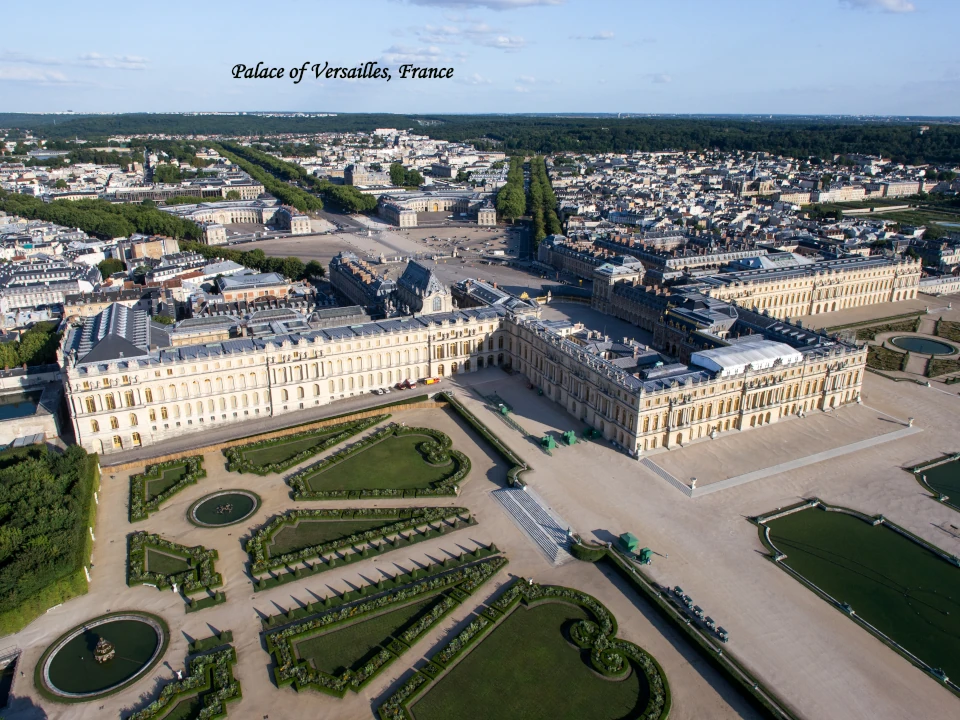
Versailles started out as a modest hunting lodge for Louis XIII before Louis XIV expanded it obsessively through the 17th century, turning it into the seat of French royal power and moving the entire royal court there in 1682. It stayed the political centre of France until the Revolution forced the monarchy out in 1789 — and it remains one of the most-visited royal estates on any France Tourist Places 2026 itinerary.
- The Hall of Mirrors — 357 mirrors lining a 73-metre gallery where the Treaty of Versailles was signed in 1919
- Grand and Petit Apartments used by the royal family
- 800 hectares of landscaped gardens, fountains, and the Grand Canal
- Marie Antoinette’s Estate, including the Petit Trianon and her rustic “hamlet”
- Musical Fountains and Musical Gardens shows on select spring and summer weekends
Good to know before you go: Buy a Palace + Estate of Trianon combined ticket on the official Versailles site to skip the ticket-counter line — the palace alone can be seen in 2–3 hours, but the gardens and Trianon estate easily take a full day. Versailles is a 40-minute RER C train ride from central Paris, so it’s best planned as a dedicated day trip rather than a half-day add-on.
Mont Saint-Michel
Legend has it that the Archangel Michel instructed a local bishop to build a sanctuary on this rocky islet in 708 AD, and the abbey that followed grew over the next thousand years into one of medieval Europe’s most important pilgrimage sites. Its isolation — surrounded by sea at high tide — also made it nearly impregnable, and it was never captured during the Hundred Years’ War, a fact locals are still proud of today.
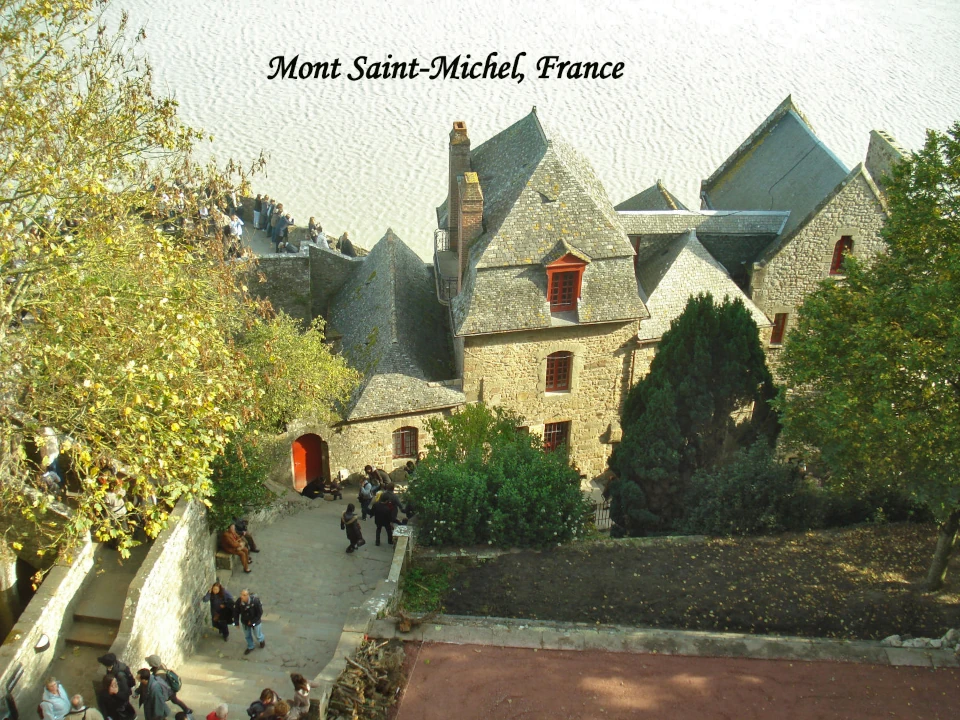
- A medieval Benedictine abbey perched at the island’s summit
- Europe’s highest tidal range — the sea can retreat over 15 km and return faster than a person can walk
- Narrow cobbled streets (the Grande Rue) lined with local creperies and shops
- A UNESCO World Heritage Site since 1979
- Ramparts walk offering panoramic views of the bay
Good to know before you go: The island is now vehicle-free — visitors park on the mainland and take a free shuttle or walk the causeway (about 40 minutes) to reach the entrance. Check the day’s tide timetable before you go, since spring tides can flood the causeway approach; the official tourist office site lists current tide schedules. Staying overnight in the nearby village lets you see the abbey lit up at night, once the day-trip crowds have left.
Normandy Beaches (D-Day Sites)
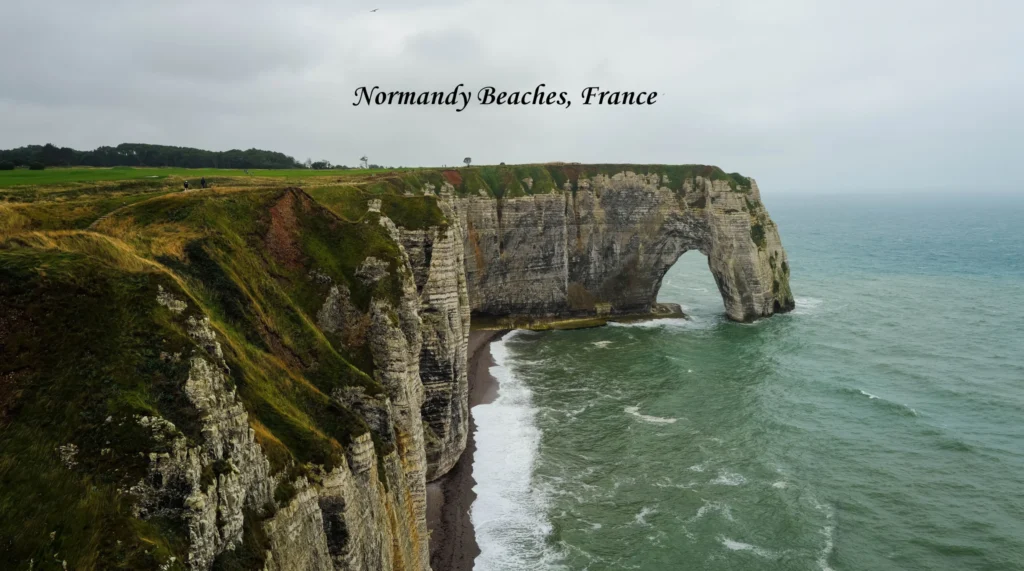
On 6 June 1944, Allied forces landed on five stretches of Normandy’s coast — codenamed Utah, Omaha, Gold, Juno, and Sword — in the largest seaborne invasion in history, marking the beginning of the end of Nazi occupation in Western Europe. The beaches and surrounding towns are now preserved as a living memorial, and visiting them remains one of the most moving stops on a France Tourist Places 2026 itinerary, especially for history-focused travellers.
- Omaha and Utah Beach — the two landing sites primarily linked to American forces
- Normandy American Cemetery and Memorial, Colleville-sur-Mer, with over 9,000 graves overlooking Omaha Beach
- Pointe du Hoc — preserved German bunkers and bomb craters on the cliffside
- Caen Memorial Museum, offering a broader overview of WWII before visiting the beaches
- Guided battlefield tours run from both Caen and Bayeux
Good to know before you go: Most sites are spread across a wide stretch of coastline, so a self-drive or guided half/full-day tour from Bayeux or Caen is far more practical than trying to visit independently by public transport. Entry to the beaches and cemetery is free, though the on-site museums charge a ticket fee. Allow at least a full day if you want to properly visit more than two or three sites — this isn’t a quick stop.
Official Flight & Airport Ticket Booking Links
- Paris Airports (CDG & Orly) — Official Site: parisaeroport.fr
- Air France (official booking): airfrance.in
- Air India (Delhi/Mumbai–Paris direct flights): airindia.com
- IndiGo (connecting flights via Europe): goindigo.in
France Tourist Places 2026: 10-Day Itinerary
If you only build one thing from this guide, make it this itinerary. It’s designed to hit the biggest France Tourist Places 2026 has to offer without rushing, while leaving room to breathe.
| Day | Destination & Highlights |
|---|---|
| Day 1 | Arrive Paris (CDG), transfer to hotel, evening Seine river cruise |
| Day 2 | Eiffel Tower + Champ de Mars + Trocadéro viewpoint |
| Day 3 | Louvre Museum + Tuileries Garden + Île de la Cité (Notre-Dame exterior) |
| Day 4 | Day trip to Palace of Versailles (gardens + palace tour) |
| Day 5 | Montmartre, Sacré-Cœur, Champs-Élysées, Arc de Triomphe |
| Day 6 | Day trip to Loire Valley (Chambord or Chenonceau château) |
| Day 7 | Travel to Normandy — Mont Saint-Michel |
| Day 8 | Normandy D-Day beaches & memorial museum, return to Paris |
| Day 9 | Free day / optional Disneyland Paris or Musée d’Orsay + shopping |
| Day 10 | Departure from Paris (CDG) |
Short on time? Business travellers can compress this into Days 1–5 (Paris core + Versailles) and add a half-day for meetings near La Défense, Paris’s main business district.
Travel Guidelines and Tips for 2026
- Indian passport holders need a Schengen Type-C short-stay visa — there is no visa-on-arrival or e-visa for France. Apply via the official portal france-visas.gouv.fr, at least 4–6 weeks before travel.
- Carry travel medical insurance of at least €30,000 Schengen-wide coverage for the full duration of your stay — this is mandatory for the visa application.
- As of April 2026, Indian passport holders transiting through the international zone of French airports (without leaving the zone) no longer require a separate Airport Transit Visa — but confirm your specific case on the official visa portal before travel.
- Book monument tickets (Eiffel Tower, Louvre, Versailles) online in advance — most sell out same-day, especially in peak season (June–August).
- Keep printed and digital copies of your visa, hotel bookings, and travel insurance — French border police occasionally ask for proof of accommodation and return flights.
- Business travellers attending meetings should also check for an “attestation d’accueil” or formal invitation letter from the host company, which supports the business visa category.
Checklist for Families Travelling with Infants
- Carry the infant’s international vaccination record and a paediatrician’s fit-to-fly note.
- Pack a lightweight, airline-approved stroller — most Paris metro stations have lifts, but not all; check accessibility maps on ratp.fr beforehand.
- Children under 4 get free entry to the Eiffel Tower; many museums (including the Louvre) offer free or discounted entry for young children — confirm on each monument’s official ticket page.
- Book “family room” or connecting-room hotel categories in advance — standard European hotel rooms are smaller than Indian hotel rooms.
- Carry baby food, formula, and any specific dietary items, as availability of Indian-brand baby products in France is limited.
- Plan itinerary days with built-in rest breaks; avoid back-to-back monument visits with infants.
- Check if your airline and the France visa checklist require a separate minor’s travel consent letter if only one parent is travelling with the child.
Types of Tickets and Tour Plans Available
- Individual monument e-tickets: Timed-entry, skip-the-line tickets for the Eiffel Tower, Louvre, and Versailles bought directly from their official sites.
- Paris Museum Pass: A multi-day pass covering 50+ museums and monuments (excluding the Eiffel Tower) — useful for tourists visiting 4+ sites. Details at parismuseumpass.com.
- Guided group tours: Half-day or full-day guided walking/coach tours with an English or Hindi-speaking guide, typically bundled by travel agents.
- Escorted package tours: Fixed-departure group tours covering flights, hotels, and sightseeing — popular with first-time Indian travellers to Europe.
- Customised/private tours: Tailor-made itineraries for business travellers or families wanting flexible schedules and private transport.
Local Transport in France
- Paris Metro & RER: The fastest way to move within Paris; operated by RATP. Buy a “Navigo” travel pass or single/carnet tickets — details at ratp.fr.
- SNCF Trains (TGV/intercity): High-speed trains connect Paris to Loire Valley, Normandy, French Riviera, and other regions. Book via sncf-connect.com.
- Airport transfers: RER B (CDG–Paris), Orlyval/Orlybus (Orly–Paris), or pre-booked private transfers.
- Taxis and ride-hailing: Uber operates widely in Paris and major cities; official taxi ranks are available at airports and stations.
- Car rentals: Useful for the Loire Valley or Provence countryside, but not recommended within central Paris due to limited parking and traffic restrictions.
2 Recommended Tour Operators for Indian Travellers
1. Thomas Cook India
A long-established Indian travel company offering fixed-departure Europe package tours, customised France itineraries, and business travel services (visa assistance, forex, and corporate travel desks). Suited to first-time travellers and business travellers who want end-to-end support. Official site: thomascook.in.
2. SOTC Travel
Part of the Thomas Cook Group, SOTC runs popular escorted “Best of France” and “Europe with France” group tours with Hindi/English-speaking tour managers, ideal for families and senior travellers. It also offers customisable private itineraries for business or leisure. Official site: sotc.in.
Note: Always compare 2–3 quotes, confirm inclusions (visa, insurance, meals), and check current itineraries directly on the operator’s official website before booking.
2 Preferred Hotels for Accommodation
1. Novotel Paris Centre Tour Eiffel (Mid-Range / Business-Friendly)
A well-located Accor-group hotel near the Eiffel Tower with family rooms, business facilities, and easy metro access — a solid mid-range choice for both tourists and business travellers. Book via the official Accor site: all.accor.com.
2. Hôtel Plaza Athénée (Luxury)
A five-star landmark hotel on Avenue Montaigne, close to the Champs-Élysées, favoured by luxury tourists and business executives for its central location and Michelin-starred dining. Official site: dorchestercollection.com.
Food Facilities Inside Tourist Places
- Eiffel Tower: Two on-site restaurants — Madame Brasserie (1st floor) and Le Jules Verne (2nd floor, Michelin-starred) — plus casual snack counters on the ground level.
- Louvre Museum: Cafés and a food court beneath the glass pyramid (Carrousel du Louvre), offering everything from quick bites to sit-down meals.
- Palace of Versailles: Cafés and a restaurant within the palace gardens; picnicking is allowed in designated garden areas.
- Mont Saint-Michel: Local Norman restaurants and creperies line the village’s main street, known for omelettes and seafood.
- Vegetarian/Indian food tip: Major cities (Paris, Nice, Lyon) have Indian and vegetarian-friendly restaurants; carry a translated allergy/dietary card if you have specific restrictions, as smaller towns have limited vegetarian options.
FAQs: France Tourist Places 2026
1. Do Indian citizens need a visa to visit France in 2026?
Yes. Indian passport holders must obtain a Schengen Type-C short-stay visa before travelling — France does not offer visa-on-arrival or an e-visa for tourism or business trips.
2. What is the best time to visit France Tourist Places in 2026?
April–June and September–October offer pleasant weather, shorter queues, and lower airfares compared to the July–August peak season.
3. How many days are enough to cover the major France tourist places?
7 days cover Paris and one day-trip region well; 10 days allow a fuller loop covering Paris, Loire Valley, and Normandy comfortably.
4. Is it necessary to book Eiffel Tower and Louvre tickets in advance?
Yes, strongly recommended. Online timed-entry tickets often sell out days in advance, especially in peak season, so book directly through the official sites.
5. Can business travellers combine work meetings with sightseeing in Paris?
Yes. Paris’s business district, La Défense, is well connected by metro/RER to central Paris, making it easy to fit in a few hours of sightseeing around meetings on a business visa.
6. Is France safe and suitable for families travelling with infants?
Generally yes. France has good healthcare access, stroller-friendly attractions, and family-oriented hotel options, though it’s best to plan lighter daily schedules with infants.
7. What is the easiest way to travel between French cities?
SNCF’s high-speed TGV trains are the fastest and most comfortable way to travel between Paris and regions like the Loire Valley, Normandy, or the French Riviera.
8. Do I need travel insurance for a France tourist visa application?
Yes, travel medical insurance with a minimum Schengen-wide coverage (commonly cited around €30,000) covering your full trip duration is a mandatory visa document.
Official & Authentic Links for Tourists and Business Travellers
- France Visa Application (Official): france-visas.gouv.fr
- France Tourism Board (Official): france.fr
- Eiffel Tower Official Tickets: toureiffel.paris
- Louvre Museum Official Tickets: louvre.fr
- Palace of Versailles Official Site: chateauversailles.fr
- SNCF Trains (Official Booking): sncf-connect.com
- Paris Public Transport (RATP): ratp.fr
- Paris Airports (Official): parisaeroport.fr
- Embassy of India, Paris: eoiparis.gov.in
- Ministry of External Affairs, India — Travel Advisories: mea.gov.in




Leave a Reply