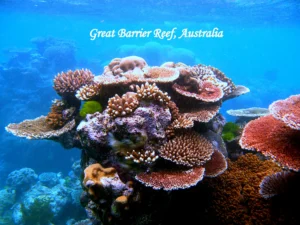
✈️ Quick Take: The Great Barrier Reef is Australia’s must-do 2026 experience, best visited from Cairns or Port Douglas between June and October for calm seas, clear visibility, and easy day-trip access from India via Singapore, Bangkok, or Kuala Lumpur.
✈️ Key Highlights:
- Base yourself in Cairns or Port Douglas — both offer daily reef cruises, and Port Douglas puts you closer to the outer reef’s best coral.
- Full-day snorkeling/diving trips start around AUD 230–260 (₹12,500–14,000); book pontoon tours for beginners and semi-sub or helicopter add-ons for non-swimmers.
- Insider tip: Visit early morning for the calmest water and best marine life sightings, and always check operator eco-certification (Reef Advantage/High Standard) for the healthiest coral zones.
To book your accomadation, click here. To Book Local Travel, click here. To book your Travel insurance here
Traveling Overseas: Click here to buy an eSIM. For more info on eSIM, click here
Table of Contents
A Brief History of the Great Barrier Reef’s Tourist Places
The Great Barrier Reef formed over roughly 20,000 years as sea levels rose after the last ice age, submerging coastal hills that became today’s coral cays and continental islands. The region has been home to the Aboriginal and Torres Strait Islander peoples, particularly the Gimuy Walubara Yidinji and Ngaro nations, for tens of thousands of years, and their sea-country knowledge still shapes how the reef is managed today.
Modern reef tourism took off in the 1930s when Green Island and Fitzroy Island opened as day-trip destinations from Cairns. Whitehaven Beach on Whitsunday Island became internationally famous through 20th-century sailing tourism, while Heart Reef was discovered from the air in 1975 and has since become one of Australia’s most photographed natural landmarks. In 1981, the reef was inscribed as a UNESCO World Heritage Site, and it’s now protected and managed by the Great Barrier Reef Marine Park Authority, which regulates all tour operators and visitor zones.
Book Your Adventure Tours in Australia
The Great Barrier Reef is the world’s largest coral reef system, stretching over 2,300 km off the coast of Queensland, Australia, and the top gateway towns for visiting it are Cairns and Airlie Beach, with must-see spots including Whitehaven Beach, Whitsunday Island, Heart Reef, Green Island and Fitzroy Island — best explored on a 4–5 day trip between June and October for calm seas and clear underwater visibility.
Whether you’re an Indian tourist planning a bucket-list snorkelling holiday or a business traveller adding a few reef days to a Sydney or Melbourne trip, this Great Barrier Reef guide covers everything — history, top islands, a ready-made 5-day itinerary, official booking links, tour operators, hotels, and family travel tips.
- 🌊 Known for: Coral reefs, colourful fish, turtles and marine life
- 🤿 Popular activities: Snorkelling, scuba diving, boat tours
- 🐢 Wildlife: Sea turtles, reef fish, rays and many other marine species
- 🌏 Famous for: One of the world’s most spectacular natural attractions
- 📸 Best for: Nature photography, underwater experiences and adventure travel
Top Places to Visit in the Great Barrier Reef
From silica-white sand to a reef shaped like a heart, this stretch of Tropical North Queensland packs in some of the most photographed scenery in Australia. Here’s how to see each spot, and where to book it.
1. Whitehaven Beach
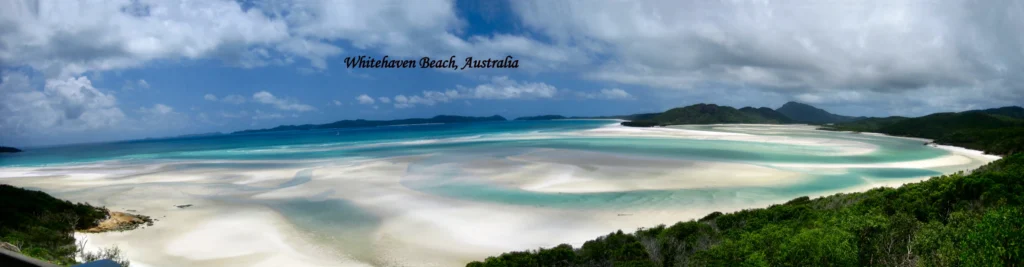
Regularly ranked among the world’s best beaches, Whitehaven Beach is famous for its 98% pure silica sand that stays cool underfoot, and the swirling turquoise shoreline at Hill Inlet. There’s no road access — it’s reached only by boat or seaplane from Airlie Beach, which is exactly what keeps it pristine.
The geological origin
Whitehaven sits on Whitsunday Island, part of a chain of islands that were once mountain peaks on the mainland. Millions of years ago, as sea levels rose after the ice ages, the surrounding lowlands flooded, cutting these peaks off from the coast and turning them into islands.
The sand itself is the real mystery. It’s 98% pure silica, but silica isn’t found in the rock of Whitsunday Island or its neighbors. Because silica doesn’t occur locally, geologists believe ocean currents carried it in from elsewhere over millions of years. The leading theory is that it originated as eroded quartz further down the Queensland coast, swept north by currents and trapped by headlands and rocky outcrops around the islands. Most beaches that caught small amounts of this sand eventually lost it again to the tides — but Whitehaven’s dunes grew so deep that a massive reserve of nearly pure quartz sand stuck around, building up over an extremely long timescale. WikipediaWikipedia
That purity is also why the sand behaves so strangely underfoot: it doesn’t absorb heat the way ordinary mixed sand does, so it stays cool even on scorching days.
The human history
The Ngaro people lived in and around the Whitsundays for thousands of years before European contact, using the islands and waters for fishing and travel by canoe. The beach’s current name is much more recent — it was given in 1879 by British naval officer Staff Commander E.P. Bedwell, an Admiralty surveyor mapping the Queensland coast at the time.
From there it stayed a remote, little-visited spot for most of the 20th century, only rising to global fame in recent decades as tourism to the Whitsundays grew — helped along by rankings from outlets like TripAdvisor and Lonely Planet naming it among the world’s best beaches. In 2017, Cyclone Debbie caused significant erosion at the southern end, requiring reconstruction work.
The lack of road access you mentioned is actually tied to conservation: the beach and much of Whitsunday Island fall within a national park, which is a big part of why the sand has stayed so pristine despite the crowds.
2. Whitsunday Island
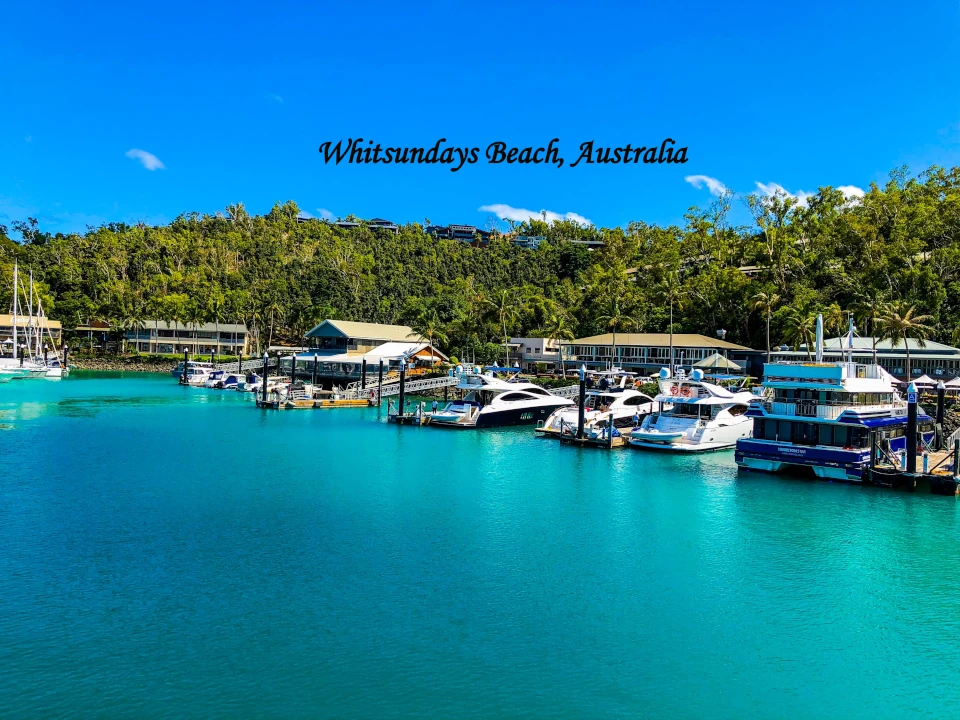
The largest of the 74 Whitsunday Islands, Whitsunday Island is the launch point for the Hill Inlet lookout trek and for day sails and overnight cruises around the group. Most trips depart from Airlie Beach or Hamilton Island.
Geological formation
The Whitsunday Islands began forming around 110 million years ago, born out of intense volcanic activity and the shifting of tectonic plates. What are now islands were once mountain peaks on the Australian mainland. As the ice ages ended and polar ice melted, sea levels rose and flooded the valleys between those peaks, cutting them off from the coast and turning the mountain range into the 74-island archipelago we see today. Whitsunday Island, as the largest of the group, is essentially the biggest surviving peak from that drowned range.
Human history before Europeans
The Ngaro people — sometimes translated as “the vanishing people” or known as “the canoe people” — lived across these islands for around 8,000 years before British colonization. They were skilled seafarers, building seaworthy canoes to move between islands and the mainland, fishing the reefs and living off island vegetation. Archaeological evidence of their presence, including cave art, still survives at sites like Nara Inlet on nearby Hook Island.
How it got its name
On 3 June 1770, Captain James Cook sailed the HMB Endeavour through the passage between these islands on his voyage up Australia’s east coast. That day was, by his reckoning, Whitsun (Whit Sunday) — the seventh Sunday after Easter on the Christian calendar — so he named it “Whitsunday’s Passage.” The island group took its name from there. (Interestingly, because Cook hadn’t yet corrected for the International Date Line, it was actually Whit Monday back in England — a small irony baked into the name.)
After Cook
European settlement didn’t begin for almost another century, arriving around 1860. It came at brutal cost to the Ngaro: colonization was associated with violent conflict, and survivors fled by canoe to the mainland near Mackay. Settlers then used the islands for logging and sheep grazing — the old sawmill remains at Sawmill Bay on Whitsunday Island are still visible today. Tourism only took off in the 1920s and has since grown into the region’s main industry, with Whitsunday Island now best known as the gateway to Whitehaven Beach and the Hill Inlet lookout trail
3. Heart Reef
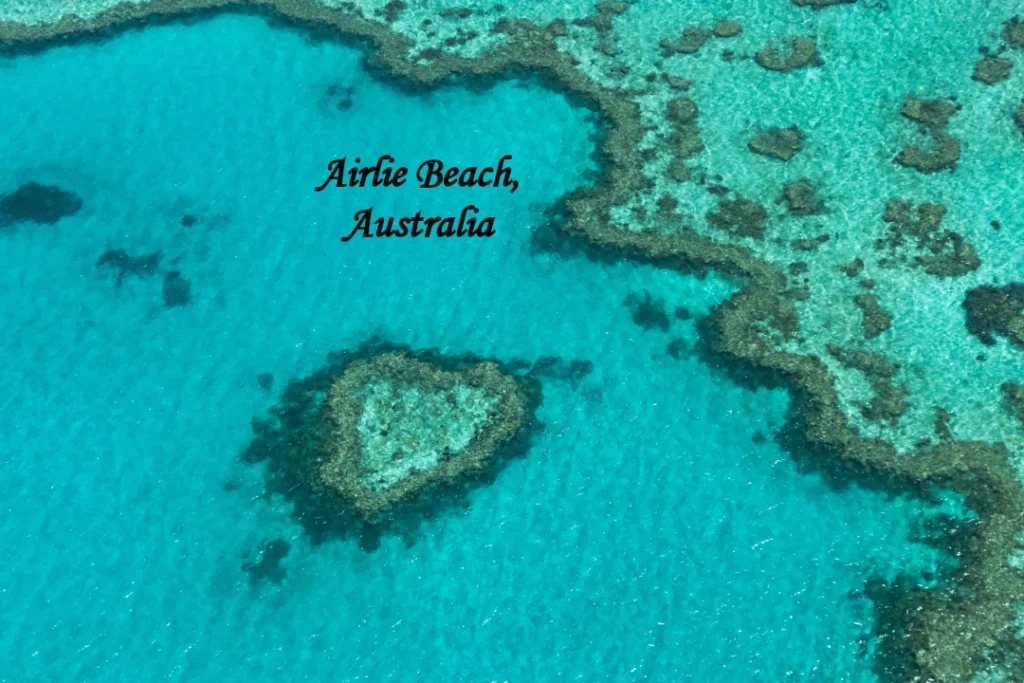
A naturally heart-shaped coral formation, Heart Reef sits inside a protected no-access marine zone — the only way to see it is from the air. Scenic helicopter or seaplane flights depart from Airlie Beach or Hamilton Island.
Natural formation
Heart Reef is a small coral bommie a rounded outcrop of coral sitting within Hardy Reef, part of the vast Great Barrier Reef system in the Whitsundays. Like all reef structures, it was built slowly over a very long time by colonies of coral polyps growing on top of the skeletons of previous generations, layer upon layer.
What makes it remarkable is that this particular bommie grew into an almost perfect heart shape entirely by chance there was no human design involved, just the accidents of coral growth patterns, currents, and light exposure shaping it over the centuries. It’s tiny by reef standards, only about 17 metres across, and its isolation from other coral clusters in clear water is part of what makes the shape so striking from above.
Discovery
Unlike Whitehaven Beach or the Whitsunday Islands, Heart Reef doesn’t have a centuries-old backstory — it’s a modern discovery. In 1975, Air Whitsunday pilot John Ramsden was flying a promotional scouting mission, looking for scenic spots to photograph for marketing purposes, when he spotted the heart-shaped formation from the air and snapped a photo. That image quickly turned Heart Reef into one of the most recognized coral formations in the world, appearing on postcards and in tourism campaigns for the Great Barrier Reef ever since.
After discovery
In the decades that followed, Heart Reef became a magnet for photographers and — eventually — a famous proposal spot, with countless couples getting engaged during scenic flights overhead. It used to be accessible for snorkeling and even picnicking nearby, with visitors mooring boats close by. But as its fame grew, conservation concerns led authorities to place it inside a protected no-access marine zone, banning diving, snorkeling, and boat landings to prevent damage to the delicate coral. Today the only way to see it is exactly as Ramsden first did — from the air, by helicopter or seaplane.
4. Green Island
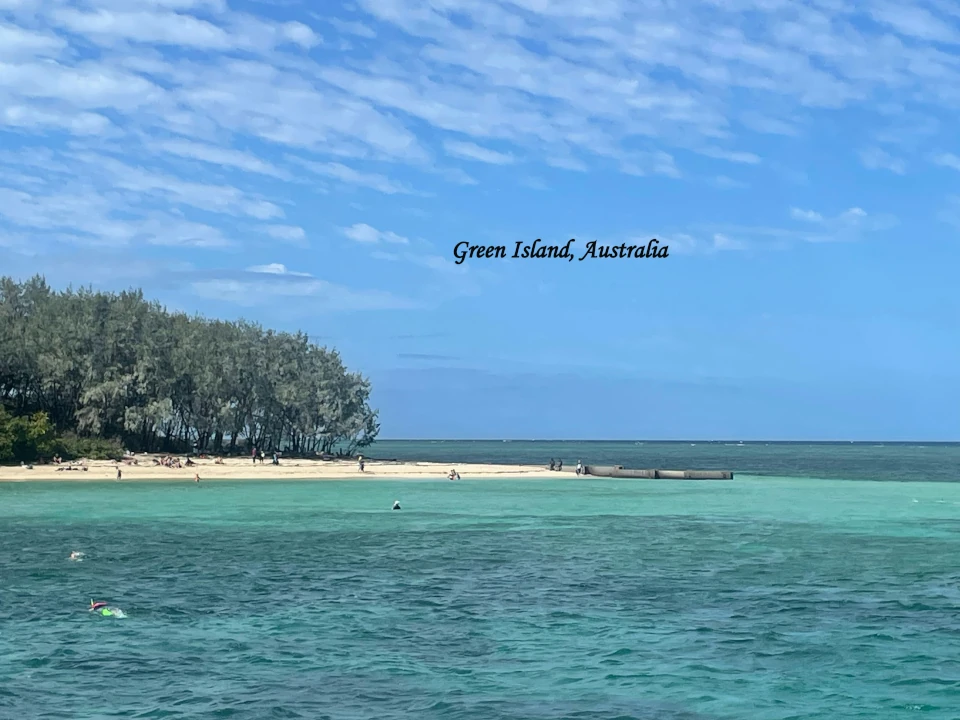
A coral cay just 45 minutes by ferry from Cairns, Green Island is ideal for a family day trip — glass-bottom boat rides, a marine observatory, snorkelling straight off the beach, and a rainforest boardwalk.
Geological formation
Green Island is a true coral cay, formed roughly 6,000 years ago as waves deposited sand, coral fragments, and other debris onto the calm side of an underlying platform reef. Over time these deposits built up above the waterline and stabilized enough for vegetation to take root. What makes it unusual among the roughly 300 coral cays in the Great Barrier Reef is that it’s the only one that developed a full rainforest canopy on top — most other cays stay low and scrubby.
Aboriginal history before Europeans
Long before Cook arrived, the island was known to the Gungandji and Yidinji/Mandingalbay peoples as Wunyami (also recorded as Dabuukji in some sources). It served as a fishing ground and a sacred ceremonial site, used for young men’s initiation rites. In local mythology it also carried stories tied to its origin, including a tale about a turtle and the island’s coral formations.
European naming and early use
Lieutenant James Cook sighted and charted the island on 10 June 1770, sailing past after rounding Cape Grafton. He named it after Charles Green, the astronomer aboard the Endeavour — not for its greenery, though that’s a common assumption. European use began in earnest in 1857, when fisherman J.S.V. Mein set up a bêche-de-mer (sea cucumber) smoking station on the island — the first recorded non-Aboriginal resident there.
From working outpost to tourist icon
By the early 1900s the island had shifted toward tourism: coconut palms were planted in 1889 to aid shipwrecked sailors, pleasure cruises began in 1890, and Cairns Council started promoting it as a day-trip destination as early as 1907. It became Queensland’s first island national park in 1937, and in that same era it racked up a string of world firsts — the world’s first glass-bottom boat (1937) and the world’s first stationary underwater observatory (1954), both still echoed in the island’s attractions today.
5. Fitzroy Island
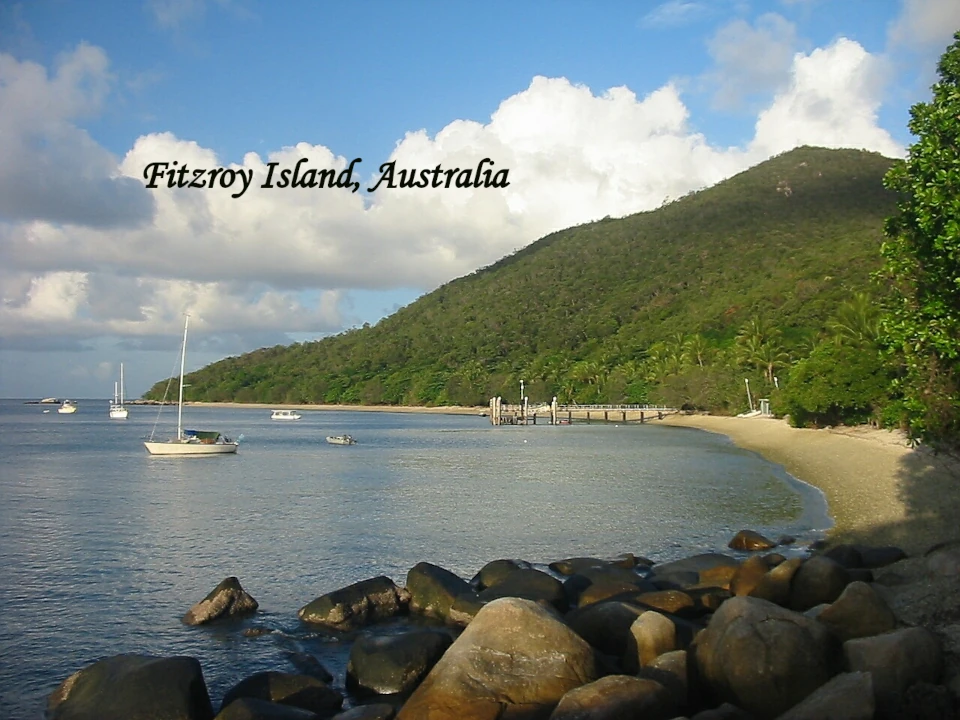
A short ferry ride (about 45 minutes) from Cairns, Fitzroy Island mixes rainforest walking trails with Nudey Beach — regularly voted one of Australia’s best beaches — plus kayaking and a turtle rehabilitation centre.
Geological formation
Unlike Green Island (a coral cay built from sand and coral debris), Fitzroy Island was once physically part of the Australian mainland. It’s made of granite, not coral, with rugged outcrops, woodlands, and rainforest-covered slopes. As the last Ice Age ended and sea levels rose, the channel between the island and the coast flooded around 6,000–8,000 years ago, cutting it off and leaving it as the island it is today.
Indigenous roots
The island’s original inhabitants, the Gunggandji people (also recorded as Gurabana Gunggandji or Gimuy Walubara Yidinji in different sources), called it Koba or Gabar, meaning “the fist.” They didn’t live there permanently but visited for hunting, fishing, and ceremonies, with their main territory based in the mountainous country around present-day Cairns. Their Dreamtime stories recount the rising waters that turned the once-connected land into an island — an oral memory of the very sea-level rise geologists later confirmed.
European naming and early use
Captain James Cook sailed past and named the island in 1770 (some sources say the name was formalized in 1778), honoring Augustus FitzRoy, 3rd Duke of Grafton, who was British Prime Minister when the Endeavour set sail. Decades later, explorer Phillip Parker King charted the island’s freshwater spring, naming it King’s Waterhole — a discovery that made Fitzroy Island a regular stop for ships needing to restock water and firewood.
Later history
Through the 1800s the island supported a pearling and bêche-de-mer industry. In 1876, it became a quarantine station for Chinese laborers heading to the Palmer River Goldfields. It later served as an Aboriginal mission growing fruit and vegetables, then a wartime naval defence outpost during WWII, complete with a lighthouse built in 1943 to guide wartime shipping. Tourism development began in earnest in 1969, and the current resort opened in 2010.
6. Cairns
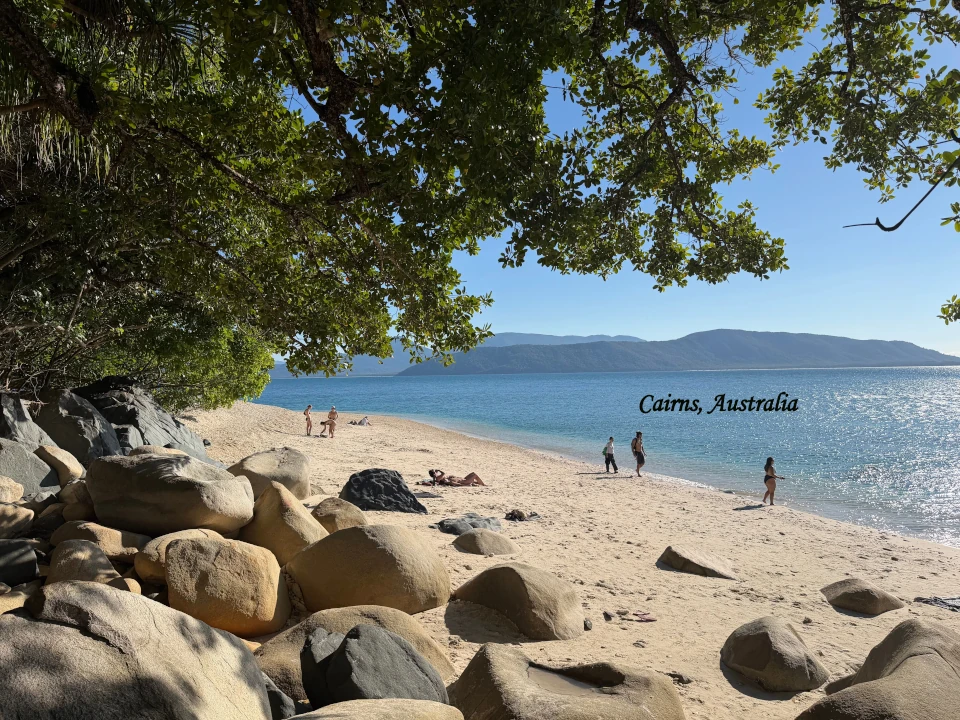
The main gateway city to the northern Great Barrier Reef, Cairns has an international airport, the Cairns Esplanade lagoon, a lively night market, and daily reef and rainforest tours to Green Island, Fitzroy Island, Kuranda and the outer reef.
Indigenous history before Europeans
The Cairns area has been home to Aboriginal people for over 40,000 years, primarily the Gimuy Walubara Yidinji people, who lived in the rainforest and along the coast, hunting, fishing, and gathering. They knew the area as Gimuy. This deep history predates everything that follows by tens of thousands of years.
Cook’s sighting
Captain James Cook sailed past and charted the area in 1770, naming the bay Trinity Bay — but he didn’t land or settle anything. The area remained outside European interest for another century.
The gold rush that built the town
Cairns exists because of gold, not the reef. In the 1870s, gold was discovered on the Hodgkinson River goldfields inland, and a port was urgently needed to move it out. Surveyor Brinsley G. Sheridan first picked a site up Trinity Inlet known as Smith’s Landing, renaming it Thornton. But after Native Police officers opened an easier track from the goldfields to a coastal site called Battle Camp — so named after a violent 1872 clash between local Yidinji people and a settler — that more accessible coastal spot won out instead. In late 1876, the settlement was renamed Cairns, in honor of the Governor of Queensland at the time, Sir William Wellington Cairns.
The early town wasn’t glamorous: the site was mostly mangrove swamp and sand ridges, which laborers had to gradually clear and fill in with mud, sawdust, and quarry ballast just to make it buildable.
Growth through sugar and immigration
Through the late 1800s, Cairns grew on the back of the sugar industry, drawing waves of Chinese and Italian immigrants who worked the plantations — a multicultural labor force that shaped the region’s character. The city was less proud of its role as a port for “blackbirding” ships, which brought indentured Pacific Islander labourers to nearby sugar plantations, a practice now recognized as exploitative and coercive.
20th century turning points
During World War II, Cairns became a major staging ground for Allied forces in the Battle of the Coral Sea, hosting a significant US Navy presence. After the war, as the gold and sugar economy matured, Cairns pivoted toward tourism, leveraging its position next to the Great Barrier Reef and the Daintree Rainforest to become the international gateway city it’s known as today.
5-Day Great Barrier Reef Itinerary
- Day 1 – Arrive in Cairns: Land at Cairns Airport, check in, stroll the Cairns Esplanade lagoon and Night Markets, and rest before your reef days.
- Day 2 – Outer Reef Snorkelling/Diving: Full-day pontoon or catamaran cruise to the outer Great Barrier Reef for snorkelling, scuba diving (beginners welcome) and a semi-submersible coral viewing tour.
- Day 3 – Green Island or Fitzroy Island: Half or full day trip for beach time, glass-bottom boat rides, rainforest walks and easy shore snorkelling — great for families with kids.
- Day 4 – Fly/Drive to Airlie Beach for the Whitsundays: Domestic flight or road transfer to Airlie Beach, then a scenic helicopter or seaplane flight over Heart Reef followed by a sailing day trip to Whitsunday Island.
- Day 5 – Whitehaven Beach & Departure: Morning boat trip to Whitehaven Beach and the Hill Inlet lookout, then transfer to the airport for your onward flight.
Travel Guidelines and Tips
- Best season: June to October (dry season, calmer seas, best visibility); avoid the stinger season (Nov–May) for unprotected swimming without a stinger suit.
- Book reef cruises and Heart Reef scenic flights at least 2–3 weeks ahead in peak season (June–August).
- Wear reef-safe (oxybenzone-free) sunscreen — most tour operators require it to protect coral.
- Pack a rash vest/stinger suit, reef shoes, a hat and a reusable water bottle.
- Indian passport holders need a valid visa (ETA or eVisitor) before travel — apply well in advance.
- Carry travel insurance that covers snorkelling and diving activities.
Tourist Places: Access, Airports & Official Ticket Booking Links
The main gateway airport for the Great Barrier Reef is Cairns Airport (CNS), with connections via Singapore, Bangkok, Kuala Lumpur or Sydney/Melbourne from India. For the Whitsundays, fly into Whitsunday Coast Airport (Proserpine) or Hamilton Island Airport.
Book Your Local Travel
- Cairns Airport (official site): cairnsairport.com.au
- Hamilton Island Airport: hamiltonisland.com.au/getting-here
- Great Barrier Reef Marine Park Authority (permits & reef info): gbrmpa.gov.au
- Tourism Tropical North Queensland (Cairns official tourism board): tropicalnorthqueensland.org.au
- Tourism Whitsundays (official): tourismwhitsundays.com.au
Checklist for Families Travelling with Infants
- Choose family-friendly reef cruises with a dedicated pontoon (calmer than open-water boats) and onboard baby-changing facilities.
- Pack UV-protective baby swimwear, a wide-brim hat and infant-safe reef-friendly sunscreen.
- Carry a lightweight, foldable stroller — most islands (Green Island, Fitzroy Island) have boardwalks suitable for wheels.
- Check age limits before booking: most reef cruises welcome infants free of charge, but scuba diving usually has a minimum age of 10–12.
- Carry a basic first-aid kit, motion-sickness precautions for the boat transfer, and enough formula/baby food, as options on the islands are limited.
- Confirm your accommodation has a cot and connecting/family rooms in advance.
Types of Tickets and Tour Plans
- Day cruise pass: Full-day outer reef pontoon trip with snorkelling gear, lunch and glass-bottom boat rides included.
- Introductory dive add-on: No certification needed, includes a guided shallow dive with an instructor.
- Certified diver package: Multiple dive sites for PADI/certified divers, gear rental included.
- Island day-trip ferry ticket: Return ferry to Green Island or Fitzroy Island, with optional activity add-ons (kayak, glass-bottom boat, marine park entry).
- Whitsundays sailing day trip or overnight cruise: Whitehaven Beach + Hill Inlet lookout, with meals included.
- Scenic helicopter/seaplane flight: Heart Reef and Whitsundays aerial tour, typically 30–90 minutes.
- Multi-day combo passes: Bundled reef + rainforest + Kuranda packages, often cheaper than booking separately.
Local Transport
- Within Cairns: Sunbus public buses, taxis, rideshare (Uber/Didi), and airport shuttles.
- Cairns to the islands: Ferry services from Reef Fleet Terminal to Green Island and Fitzroy Island (30–45 minutes).
- Cairns to Whitsundays: Domestic flights (Cairns–Proserpine/Hamilton Island) or a 5–6 hour coach/drive down the coast.
- Within Airlie Beach/Whitsundays: Local shuttle buses, hop-on-hop-off boats, and rental cars for exploring the mainland coast.
- Car rentals: Widely available at both Cairns and Hamilton Island/Whitsunday Coast airports for those wanting flexibility.
Recommended Tour Operators
1. Quicksilver Cruises
One of the longest-running outer reef operators, running daily pontoon cruises from Port Douglas/Cairns to the Agincourt Ribbon Reefs, with snorkelling, introductory dives, semi-submersible tours and a marine biologist onboard.
Official site: quicksilver-cruises.com
2. Cruise Whitsundays
The largest Whitsundays operator, offering Whitehaven Beach day trips, Hill Inlet lookout treks, Reefsuites pontoon stays, and Hamilton Island/Airlie Beach transfers.
Official site: cruisewhitsundays.com
Preferred Hotels for Accommodation
1. Riley, a Crystalbrook Collection Resort (Cairns)
A beachfront-style resort on the Cairns Esplanade with a saltwater lagoon pool, close to reef cruise terminals and the night markets — good for both leisure and business travellers needing central access.
Book Your Hotels
2. Daydream Island Resort (Whitsundays)
An all-inclusive island resort with a living reef lagoon, spa and direct boat access to Whitsunday cruises — ideal for families and honeymooners basing themselves in the Whitsundays.
You can compare and book these and other stays via Ryde Travel’s accommodation booking page.
Food Facilities Inside the Tourist Places
- Reef pontoons: Buffet lunch (Australian/Asian-fusion) included in most day-cruise tickets, with vegetarian options generally available on request.
- Green Island: Beachfront cafés, a licensed restaurant and a general store for snacks and drinks.
- Fitzroy Island: Resort restaurant, casual beach bar and a kiosk near Nudey Beach.
- Whitsunday cruises: Onboard lunch/afternoon tea included, with tropical fruit and light snacks common on sailing day trips.
- Cairns city: Wide choice from the Night Markets food court to fine dining, including Indian restaurants for travellers wanting familiar flavours.
Frequently Asked Questions
1. What is the best time to visit the Great Barrier Reef?
June to October is best, offering dry weather, calm seas, warm water and the clearest underwater visibility for snorkelling and diving.
2. How do I get to the Great Barrier Reef from India?
Fly into Cairns Airport or Brisbane/Sydney with a connecting domestic flight, typically via a layover in Singapore, Bangkok or Kuala Lumpur.
3. Do I need to know how to swim to visit the reef?
No. Most cruises offer glass-bottom boats, semi-submersibles and floatation devices, so non-swimmers can still see the coral and marine life comfortably.
4. Is the Great Barrier Reef suitable for children and infants?
Yes, especially Green Island and Fitzroy Island, which have calm shallow water, boardwalks and family-friendly facilities; check age limits before booking scuba activities.
5. How can I see Heart Reef?
Heart Reef is in a protected no-access zone and can only be viewed from a scenic helicopter or seaplane flight departing from Airlie Beach or Hamilton Island.
6. Do Indian tourists need a visa for Australia?
Yes, Indian passport holders need a valid Australian visitor visa (such as a subclass 600) before travel; apply through the Australian Department of Home Affairs.
7. How many days do I need for the Great Barrier Reef?
4–5 days is ideal to comfortably cover Cairns, an outer reef cruise, Green Island or Fitzroy Island, and a Whitsundays/Whitehaven Beach day trip.
8. Is the Great Barrier Reef good for business travellers with limited time?
Yes — a single full-day reef cruise from Cairns can be added to a Sydney or Brisbane business trip, and Cairns Airport has direct connections making it an easy short extension.
Official & Authentic Travel Resources
- Tourism Australia (official): australia.com
- Queensland Tourism (official): queensland.com
- Great Barrier Reef Marine Park Authority: gbrmpa.gov.au
- Smartraveller (Australian Govt. travel advisory): smartraveller.gov.au
- Australian Department of Home Affairs (Visas for Indian travellers): immi.homeaffairs.gov.au
- Wet Tropics Management Authority (rainforest & reef region info): wettropics.gov.au


Leave a Reply