✈️ Quick Take: Planning a Ladakh trip in 2026 means timing your visit right, budgeting for permits and altitude days, and preparing for extreme high-altitude conditions before you land in Leh.
✈️ Key Highlights:
- Spend at least 2 full days acclimatising in Leh (11,500 ft) before heading to higher passes like Khardung La or Pangong Tso.
- Inner Line Permits (ILP) are mandatory for Nubra, Pangong, and Tso Moriri — apply online in advance to save time.
- Best travel window is May to September; carry cash, as ATMs are limited outside Leh and network connectivity is patchy across the region.
Leh Ladakh Travel Tips 2026 in one line: fly into Leh (IXL), spend 2 full days acclimatising before crossing Khardung La or visiting Pangong Tso, pay the mandatory Ladakh Environment/Green Fee online at lahdclehpermit.in, and plan your trip between May and September for open roads and clear high-altitude lakes. This guide covers Ladakh’s history, a ready-to-use 10-day itinerary, tourist places with official booking links, family and infant travel checklists, local transport, verified tour operators, hotel picks, and food availability at each site — everything a tourist or business traveller needs to plan a 2026 Ladakh trip with confidence.
To book your stay, click here. To Book Local Travel, click here. To book your travel insurance here or here
Traveling Overseas Click here to buy a eSIM. For more info Click here
Table of Contents
A Brief History of Ladakh’s Tourist Places
Ladakh, often called “Little Tibet,” sits on the ancient trans-Himalayan trade routes that once connected Central Asia, Tibet, and the Indian subcontinent. Leh town grew into a prosperous stop on the Silk Route, and this history shaped almost every major attraction you’ll visit today. The region opened to international tourism only in 1974, and to domestic road travel more fully after the Srinagar-Leh highway (completed 1962) and the Leh-Manali highway (opened 1989) made it accessible beyond military and trade caravans. Since 2019, Ladakh has been a separate Union Territory with its own tourism department, which now runs the official Ladakh Tourism portal.
Book Your Packages in Ladakh
Leh Palace
Leh Palace was built in the early 17th century under King Sengge Namgyal, one of Ladakh’s most powerful rulers, as the seat of the Namgyal dynasty. Rising nine storeys above Leh town, its mud-brick and timber construction is often compared to the Potala Palace in Lhasa for its similar tiered, fortress-like architecture. The royal family eventually moved to the smaller, more manageable Stok Palace across the Indus, leaving Leh Palace to fall into disrepair for decades — it’s now under restoration by the Archaeological Survey of India and open for visitors, with sweeping views over the town and surrounding mountains from the upper terraces.
Leh Palace — Overview & Visitor Details
History: Construction began in 1553 under Tsewang Namgyal, founder of the Namgyal dynasty, and was completed by his nephew Sengge Namgyal in the 17th century. It was built around 1600 and served as the residence of Ladakh’s royal family until the mid-19th century. It was actually the summer residence — the kings moved to Shey Palace in winter. Rising nine storeys, the upper floors housed the royal family while the lower floors held stables and storerooms. Its tiered, fortress-like form is often likened to Lhasa’s Potala Palace.
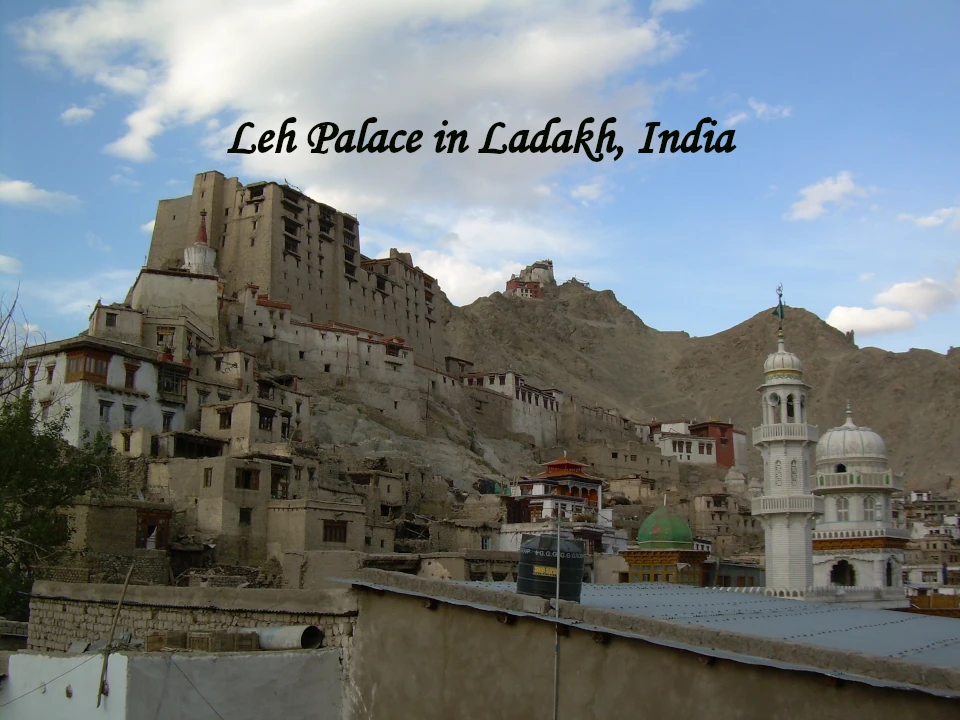
After Dogra forces from Jammu invaded Ladakh, the king abandoned the palace and it fell into a deteriorated state for a long time, with little of its interior decoration surviving. The royal family relocated to Stok Palace across the Indus. Restoration by the Archaeological Survey of India is largely complete, and the palace now houses a museum with jewelry, ornaments, ceremonial dress, crowns, and Tibetan thangka paintings said to be over 450 years old.
Visitor Info
- Timings: Open 8 AM – 7 PM daily, including Sundays, though hours shift slightly with sunrise/sunset (may close earlier in winter).
- Entry fee: ₹25 per person for Indian nationals; ₹300 per person for foreign nationals.
- Altitude: About 11,700 ft (3,566 m).
- Getting there: Best reached by your own car or motorcycle via a motorable (if narrow) road right to the gates — it’s only about a kilometer from Leh’s main market. No public transport runs there; an Eeco van costs roughly ₹200/person, or you can rent a bike/scooter.
- Best time to visit: Evening — cooler weather and a scenic sunset view over the town.
- Photography: Photography is allowed inside, but videography requires prior permission.
- Nearby: Tsemo Castle (built c. 1555–1575) sits just above the palace at higher altitude, reachable via a steep footpath from the main gate or a short drive — good for sunset views too.
Booking Links
Flights, hotels, and Ladakh tour packages (Leh Palace is typically included as a stop on Leh city sightseeing tours):A few practical notes: Leh Palace itself doesn’t require advance online ticketing — you pay the entry fee at the gate. It’s best combined with nearby Tsemo Castle and Leh’s old town on the same visit, and works well as a half-day add-on to any Leh city sightseeing itinerary. If you want, I can also pull up a map with directions or suggest specific hotels near Leh’s main market within walking distance of the palace.
Thiksey Monastery
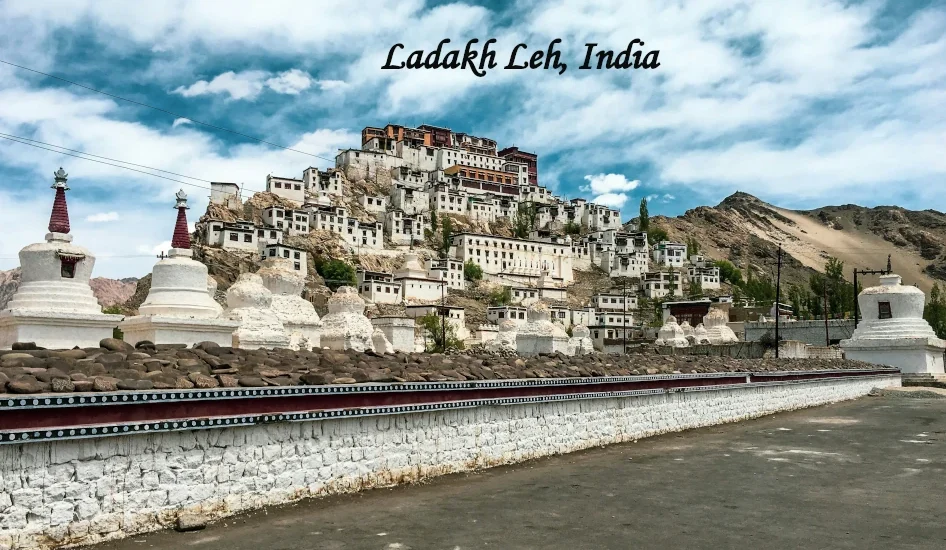
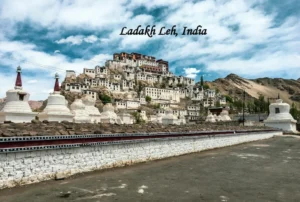
Perched on a hilltop about 19 km from Leh, Thiksey Monastery dates back to the 15th century and belongs to the Gelugpa or “Yellow Hat” school of Tibetan Buddhism — the same order as the Dalai Lama. Its whitewashed, 12-storey complex is frequently likened to a mini Potala Palace, and inside sits one of Ladakh’s most striking sights: a two-storey-high, 15-metre statue of the Maitreya Buddha, built to mark a visit by the 14th Dalai Lama. Arrive early if you can — the monks’ morning prayer ceremony, with horns, chanting, and butter tea, is open to visitors and is one of the most atmospheric experiences in the region.
Nubra Valley
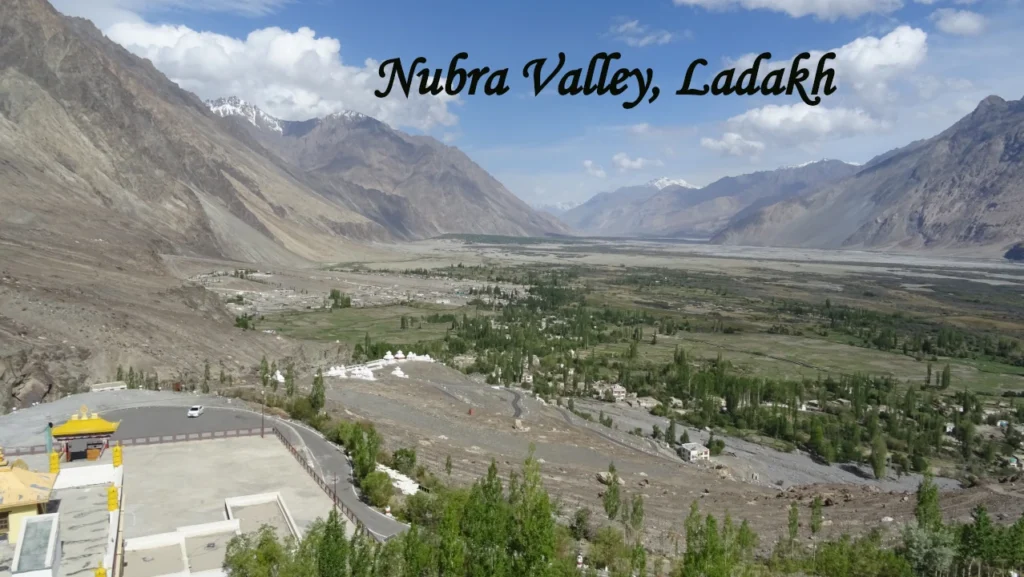
Long before it became a bucket-list destination, Nubra Valley was a working junction on the Silk Route, where caravans travelling between Leh and Kashgar (in present-day Xinjiang) would stop to rest and trade. The double-humped Bactrian camels you can ride today at the Hunder sand dunes are direct descendants of the animals that once carried silk, salt, and pashmina wool across these same trails. Reached via Khardung La, the valley’s cold-desert landscape of dunes, poplar groves, and monasteries like Diskit still carries that frontier, crossroads feel — it’s as much a piece of trade history as it is a scenic stop.
Pangong Tso and Tso Moriri
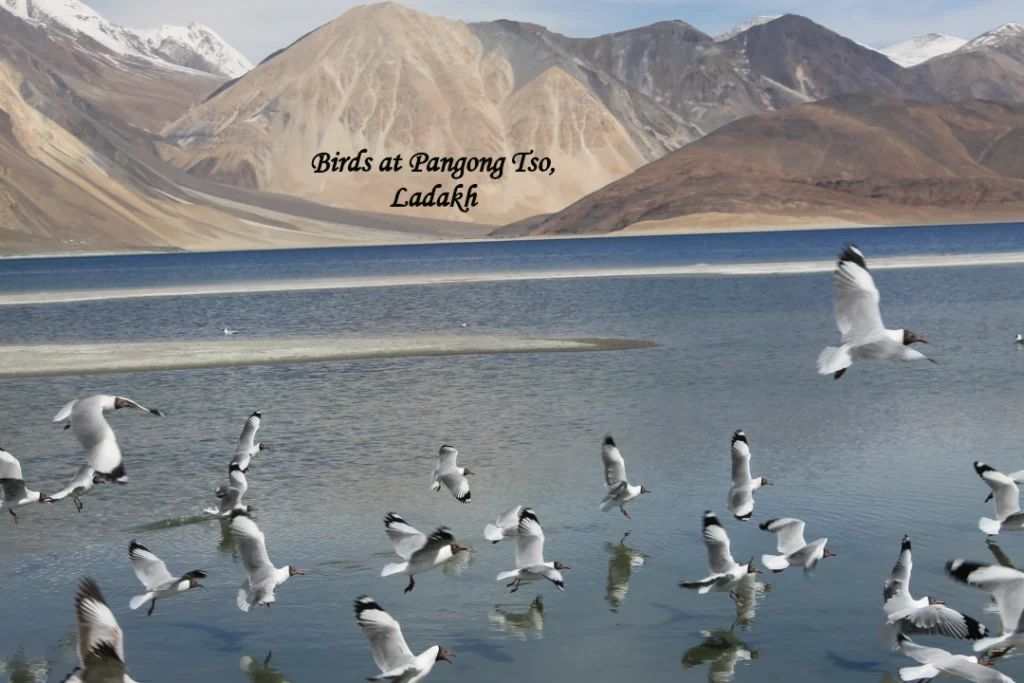
Pangong Tso and Tso Moriri are the twin high-altitude lakes of the Changthang plateau, a windswept expanse that Ladakh shares culturally and ecologically with the Tibetan highlands. For centuries, the nomadic Changpa herders have grazed pashmina goats, yaks, and sheep across this terrain, moving with the seasons in a way of life that still continues today.
Both lakes now fall under wetland and wildlife protection, part of the Changthang Cold Desert Wildlife Sanctuary, which safeguards species like the black-necked crane and Tibetan wild ass alongside the herders’ traditional grazing rights. Pangong is the more visited of the two thanks to its road access and famous colour-shifting waters, while Tso Moriri, further and quieter, rewards travellers who make the extra journey with a genuinely remote, undisturbed landscape.
Khardung La
Before it became a rite of passage for road-trippers and bikers, Khardung La was a working military and trade pass, carrying caravans from Leh toward Nubra Valley and onward along the Silk Route into Central Asia. Today it’s known as one of the world’s highest motorable passes, and crossing it is still the only road link between Leh and Nubra. The altitude (over 17,500 ft) makes it as much a physical checkpoint as a scenic one — most visitors stop just long enough for photos and a cup of tea before continuing on, since the thin air here makes lingering uncomfortable for most travellers.
book your Tour Activities
Checklist for Families Travelling with Infants
- Consult a paediatrician before travel — most doctors recommend caution or avoidance of high-altitude travel (above 8,000-10,000 ft) for infants under 12 months due to AMS risk.
- Carry a pulse oximeter to monitor oxygen saturation if travelling with young children.
- Pack extra thermal layers, a warm sleeping bag/blanket, and a hot water bottle — nights are cold even in summer.
- Carry sufficient baby food, formula, and bottled/boiled water; supplies are limited outside Leh town.
- Book accommodation with easy ground-floor access and heating, and avoid same-day travel above Khardung La for infants.
- Keep travel days short; build in extra rest days compared to a standard adult itinerary.
- Carry a basic paediatric first-aid kit including fever medication, ORS, and any prescribed altitude medication approved by your doctor.
- Children below 12 years are exempt from environment fee/permit charges but should still carry a valid photo ID.
Types of Tickets and Tour Plans Available
- Independent self-drive/taxi tour: Book local taxis day-wise through the Leh Ladakh Taxi Operators Cooperative; most flexible but requires manual permit handling.
- Fixed-departure group tours: Pre-scheduled 6-10 day packages covering Leh, Nubra, and Pangong with shared transport — cost-efficient for solo and small-group travellers.
- Private customised tours: Dedicated vehicle, driver, and itinerary tailored to family, business, or photography needs — offered by most registered Leh-based tour operators.
- Trekking and adventure packages: Multi-day treks (Markha Valley, Chadar Trek, Stok Kangri) with guides, porters, and camping gear included.
- Corporate/business travel packages: Short 3-5 day Leh-centric itineraries with hotel-conference logistics, often arranged directly with business-friendly hotels like The Grand Dragon Ladakh.
Local Transport in Ladakh
- Pre-paid taxis: Available at Leh Airport arrivals; fares are fixed by the local taxi union.
- Local taxi unions: All inter-city travel (Nubra, Pangong, Tso Moriri) is typically arranged through the Leh Ladakh Taxi Operators Cooperative, with union-fixed rates by route.
- Self-drive rentals: Available in Leh town for those comfortable with high-altitude mountain driving; check vehicle permits before crossing to restricted zones.
- Shared sumos/buses: Budget option connecting Leh to nearby towns and villages, though less frequent to remote lakes.
- Motorcycle rentals: Popular with adventure travellers for the Leh-Manali or Leh-Srinagar highway routes; requires a valid driving licence and riding experience at altitude.
Tour Operators (Reviewed, Leh-Based)
- Ju-Leh Adventure — a Leh-based trekking and tour agency recognised for Ladakh trekking and adventure trip organisation, offering customised tours, treks, and homestay-based itineraries across Ladakh.
- Higher Himalaya (Ladakh) — a Leh-based operator with over a decade of experience running cultural tours, adventure expeditions, and wildlife/snow leopard expeditions across Ladakh.
Always verify a tour operator is registered with the Ladakh Tourism Department or listed with the All Ladakh Tour Operators Association before booking, and confirm permit-handling responsibility in writing.
Preferred Hotels for Accommodation
- The Grand Dragon Ladakh — a well-established full-service hotel in Leh town, popular with both leisure and business travellers for its consistent heating, dining, and event/meeting facilities suited to corporate visits.
- Hotel Ashoka Ladakh — a comfortable mid-range hotel on Leh's Main Tukcha Road, known for its central location, reliable service, and easy access to the market and monastery circuit.
Food Facilities Inside the Tourist Places
- Leh town: Widest range of options — local Ladakhi food (thukpa, momos, skyu, butter tea), Indian, and continental cafes concentrated around Main Bazaar and Changspa.
- Nubra Valley (Hunder/Diskit): Basic dhabas and guesthouse kitchens serving simple Indian and Ladakhi meals; limited variety compared to Leh.
- Pangong Tso: Very limited food options — mostly camp/tent-stay kitchens offering fixed basic meals; carry snacks and water as a backup.
- Tso Moriri: Minimal facilities — a few homestays and camps near Karzok village; pre-book meals with your accommodation as there is little else en route.
- Monastery circuit (Thiksey, Hemis, Shey): Small local tea stalls near entrances; no full-service restaurants inside monastery premises.
Frequently Asked Questions — Ladakh Travel Tips 2026
1. What is the best time to visit Ladakh in 2026?
May to September is the ideal window, when Leh-Manali and Srinagar-Leh highways are open and high-altitude lakes are accessible. Winter (December-February) suits travellers specifically chasing the Chadar Trek or snow landscapes but requires specialised cold-weather planning.
2. Do Indian tourists need a permit to visit Ladakh in 2026?
A separate Inner Line Permit is not required for most areas, but domestic tourists must pay the Ladakh Environment/Green Fee online at lahdclehpermit.in and carry the payment receipt, which may be checked at highway checkposts.
3. How many days are enough for a Ladakh trip?
A 7-10 day trip is ideal to properly acclimatise and cover Leh, Nubra Valley, and Pangong Tso without rushing. Business travellers can manage a shorter 4-5 day Leh-centric visit.
4. Is Ladakh safe for infants and young children?
High altitude poses real risks for infants under 12 months, so a paediatrician consultation is strongly recommended before travel. Older children generally do well with a gradual acclimatisation schedule and warm clothing.
5. How do I book flight tickets to Ladakh?
Book directly through official airline sites such as Air India, IndiGo, or SpiceJet for flights into Kushok Bakula Rimpochee Airport (IXL), Leh. Direct flights are available from Delhi, and seasonal flights operate from other major Indian cities.
6. What is the ideal acclimatisation schedule in Ladakh?
Spend at least 2 full days resting in Leh before attempting any pass above 13,000 ft, avoid alcohol and heavy exertion on arrival, and stay well-hydrated to reduce the risk of Acute Mountain Sickness.
7. What local transport options are available in Ladakh?
Pre-paid taxis, union-rate taxis for inter-city routes, self-drive rentals, shared sumos, and motorcycle rentals are all available in Leh, with taxi unions setting fixed rates for popular routes like Nubra and Pangong.
8. Are ATMs and mobile networks available across Ladakh?
ATMs are reliable in Leh town but scarce beyond it, so carry sufficient cash for Nubra, Pangong, and Tso Moriri. Mobile network coverage is patchy outside Leh, and only certain postpaid connections work in border areas — check current network advisories before departure.
Official and Authentic Links for Tourists and Business Travellers
- Official Ladakh Tourism Portal — festivals, attractions, and travel calendar
- UT Ladakh Administration (ladakh.gov.in) — official government notices and advisories
- Ladakh Environment Fee / Permit Portal (LAHDC Leh)
- Airports Authority of India — Leh Airport information
- Archaeological Survey of India — Leh Palace and heritage monument details
- Air India / IndiGo / SpiceJet — official flight booking
- Ministry of Tourism, Government of India — national travel advisories
Visit our other blogs in Ryde Travel
Kashmir Travel Guide 2026: Best Places to Visit
Shimla Manali Holiday 2026: Premium Himachal Experience
Andaman Islands 5 Days Itinerary: Best Places & Travel Plan (2026)
Final Thoughts
Ladakh rewards travelers who respect its altitude more than its itinerary. The single biggest factor in a good trip isn't which lakes or monasteries you see — it's whether you give your body time to adjust. Two full rest days in Leh before pushing up to Khardung La or out to Pangong Tso makes the difference between an enjoyable trip and a miserable one.
Beyond that, Ladakh is refreshingly low on red tape for Indian travelers — no Inner Line Permit for most areas, just the environment fee paid online in advance. The bigger planning challenge is logistics: cash runs short outside Leh, networks drop out fast, and food options thin dramatically once you're past the main town. Pack accordingly, and treat Leh as your base for restocking between excursions.
A 7–10 day trip strikes the right balance, letting you cover Leh, Nubra Valley, and Pangong without rushing the acclimatisation schedule. For families with infants, the calculus shifts — the guide's advice to consult a paediatrician and build in extra rest days is worth taking seriously, since Ladakh's altitude isn't forgiving of shortcuts.



Leave a Reply